Courts Have Ended Majority Rule in South Africa
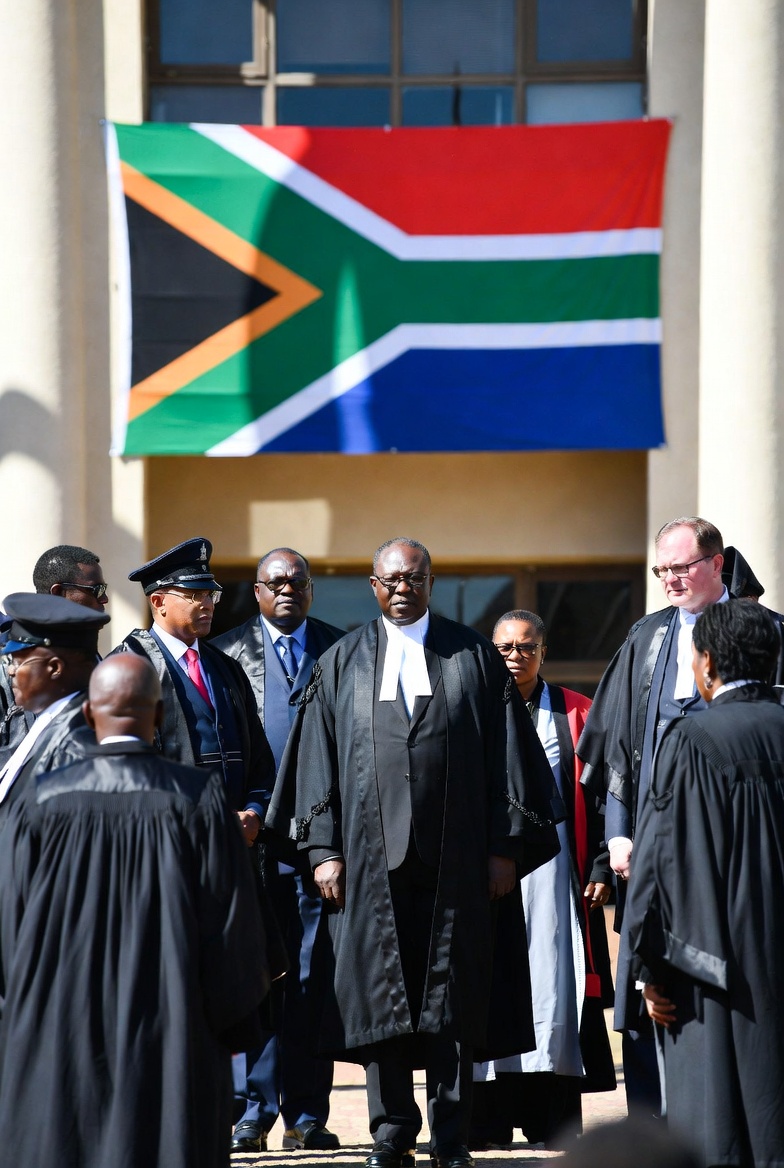
South Africa is no longer a majority-rule country in any straightforward sense. An elected majority can still pass ordinary laws, form governments, and allocate budgets. On the questions the Constitution covers, however, that majority does not have the final word. Courts do. Two recent decisions make the point without theory.
In September 2026 the Constitutional Court struck down the entire Public Procurement Act of 2024. Parliament had passed it. The President had signed it. The Court erased it because the public-participation process was judged inadequate. The statute never took effect. In Economic Freedom Fighters and Another v Speaker of the National Assembly and Others, decided in May 2026, the Court invalidated a National Assembly rule governing impeachment proceedings. It held that the rule allowed a parliamentary majority to stall accountability, rewrote the rule on an interim basis, and directed Parliament to amend it. In both cases the legislature’s decision was not merely reviewed. It was nullified.
This is not an aberration. Section 2 of the Constitution states that the Constitution is the supreme law of the Republic, that law or conduct inconsistent with it is invalid, and that its obligations must be fulfilled. Section 172(1)(a) then requires a court, when deciding a constitutional matter, to declare that any law or conduct inconsistent with the Constitution is invalid to the extent of the inconsistency. The court has no discretion once inconsistency is found. Combined with the amendment rules in section 74, the effect is structural. Changing the founding values in section 1—including the supremacy of the Constitution itself—requires the support of 75 percent of the National Assembly and six provinces. Changing the Bill of Rights requires two-thirds of the Assembly and six provinces. A simple parliamentary majority, or even a substantial one, cannot revise the rules that limit it.
The result is a counter-majoritarian order by design. The 1996 settlement was written to stop a parliamentary majority from doing whatever it liked. The historical reason is clear: under apartheid, parliamentary sovereignty allowed an unrepresentative legislature to pass almost any law, and the courts could not stop it. The Constitution was the deliberate alternative. It succeeded in that narrow aim. The consequence is that sustained majority rule on contested questions of rights, procedure, institutional design, and increasingly policy is no longer possible. A majority that cannot clear the constitutional threshold, or that fails the Court’s reading of rationality, public participation, or justiciable rights, does not govern that issue.
Politics has adjusted. Parties that lose in Parliament litigate. Governments draft legislation under the shadow of likely invalidation. Controversies over traditional leadership, divorce and pension rights, health legislation, and parliamentary rules migrate into the courts. Political Nexus has already described the broader pattern as the rise of juristocracy: courts shaping outcomes on immigration, service delivery, procurement, and the internal workings of Parliament. The Public Procurement Act and the impeachment-rule cases are recent illustrations, not outliers. Each time a court invalidates an Act or rewrites a rule, it confirms that the elected majority is not the final authority.
Ordinary politics still occurs inside the constitutional frame. A majority can pass a money bill, set tax rates, or appoint ministers without judicial veto, provided it stays within the text. The country is not administered by judges on every daily decision. The limit is real nonetheless. When the question touches a justiciable right, a prescribed procedure, or a founding value, the Court can and must invalidate the majority’s choice. Because the amendment thresholds are high, the current electorate cannot easily reclaim that authority. The 1996 text, interpreted by judges the voters did not elect, remains the ceiling.
None of this requires pretending that pure parliamentary sovereignty is an attractive alternative. The apartheid version of it was not democratic. It was a legislature without a universal franchise. The live question is different: whether the limit on majorities should remain a frozen 1996 settlement enforced by courts, or whether a democracy of universal franchise should be able to revise its own rules through political means. A constitution that cannot be amended by the living public on the issues that matter is not merely protecting rights. It is rationing the authority of the majority that those rights were meant to empower.
South Africa can keep a written constitution as a statute of institutions—how elections work, how money bills pass, how judges are appointed—without treating that constitution as supreme over the electorate. Lowering amendment thresholds, confirming major changes by referendum, and treating socio-economic provisions as policy directives rather than litigation tickets would restore a political path. Until then, the description is accurate. Courts have made majority rule impossible on the questions the Constitution covers. The country is governed by a prior settlement, not by the majority that lives under it.
Read Next Governing by Court Order: The Rise of Juristocracy in South Africa
About The Author

 South Africa Needs a New Electoral System — Not New Parties
 The Erasure of the Native South African
 The Gaza Deception: How South Africa Helped Empty Palestine
 Courts Have Ended Majority Rule in South Africa
 If State Power Built Afrikaner Prosperity, Why Isn’t It Working for Black South Africans?
 Rights Without Capacity: Is South Africa Building an Illusion of Delivery?
 Who Funds Court Rulings?