South Africa Needs a New Electoral System — Not New Parties
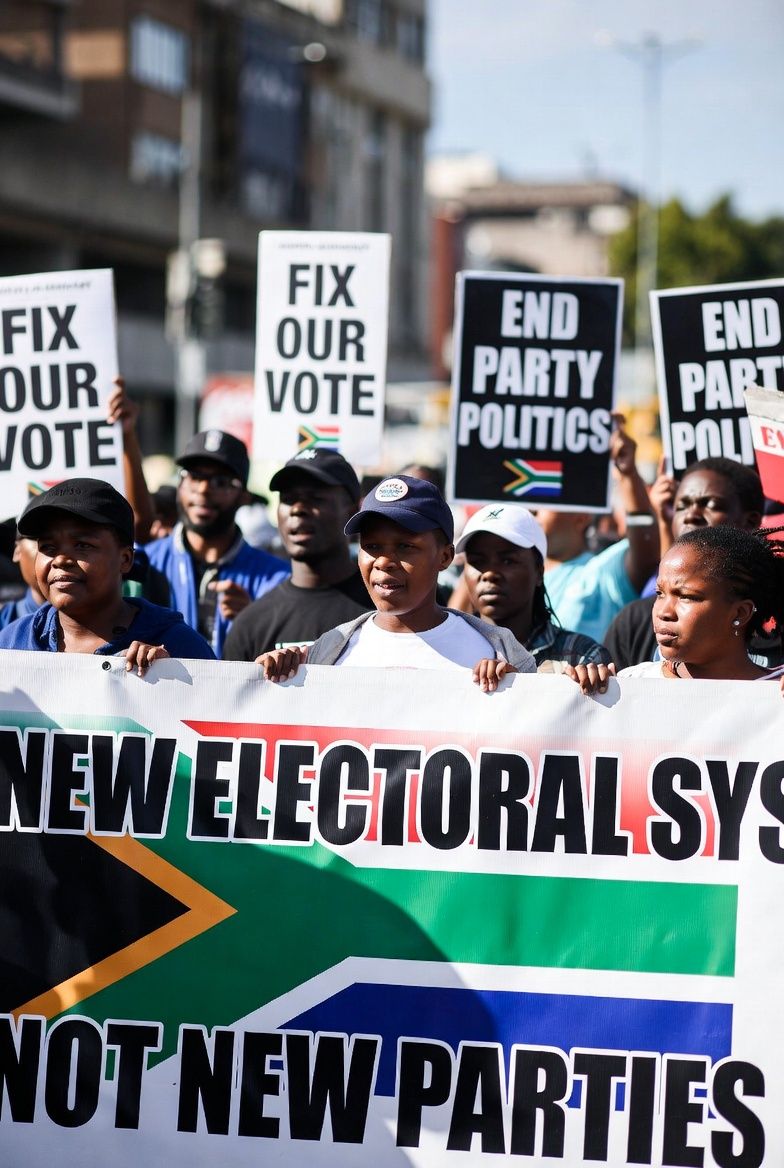
Citizens need to demand a new electoral system
South Africa’s political landscape has shifted permanently. For the first time since 1994, no single party can govern alone, forcing coalitions at national, provincial, and municipal levels. Many analysts have treated this as a natural evolution of democracy—but the truth is more profound, older, and more strategic than most people realise.
Coalition governments have been part of the ANC’s National Democratic Revolution (NDR) thinking for decades. At the same time, key opposition parties—including the DA—have quietly cultivated donor networks that overlap with the ANC’s own funders. When these financial relationships intersect with parliamentary voting patterns, a picture emerges of political elites who share more with one another than they publicly admit.
This article examines who funds whom, which parties vote together, how donor networks influence decision-making, and what this means for South African voters, who increasingly feel excluded from meaningful political choice.
The public story is simple: no party received 50%, so coalition negotiations became unavoidable. But in the background, donor networks—particularly those connected to the Brenthurst Foundation and a handful of multinational and local corporate groups—have shaped political messaging, policy alignment, and even coalition preferences long before the 2024 elections.
While the ANC has historically relied on business-friendly donors alongside traditional struggle-era networks, the DA’s ties to the same policy think tanks and donor circles obscure the ideological differences between the two parties.
Brenthurst Foundation–linked donors, for example, have sponsored policy retreats, leadership programmes, and advisory sessions for both ANC and DA members over the past decade—creating an informal shared worldview among elites.
This shared worldview becomes crucial when votes align in Parliament.
- South Africans expect political parties to disagree on almost everything. But the voting record tells a different story.
Across multiple administrations—long before coalitions—ANC and DA MPs have voted in alignment on:
- The 2020 Covid-19 emergency economic bills
- Certain budget appropriations
- Infrastructure development frameworks (SANRAL, NHI technical funding components, energy procurement clauses)
- Municipal restructuring
- State-owned enterprise rescue packages (except for ideological grandstanding)
- Votes related to international investment treaties and trade agreements
Even the EFF has aligned with the ANC on several state-centric or state-expansion bills, especially those linked to land expropriation and expanded regulatory authority.
These cross-party alignments show that South Africa’s political system often functions less as a clash of ideologies and more as a consensus between state-centric or donor-aligned elites.
How Donors Influence South African Coalitions
Donor Funding → Party Policy Retreats → Shared Policy Language → Voting Alignment → Coalition Compatibility
Policy workshops funded by think-tanks
Leadership programmes for MPs
Sponsored research distributed to multiple parties
Business networks lobbying across party lines
Outcome:
Even parties that appear ideologically different adopt similar fiscal, foreign policy, or state-centric positions—making coalitions easier for elites, but less transparent for voters.
The Electoral Reform South Africans Deserve
1. Direct election of the President
– Voters pick the President, not political parties.
2. Elect MPs directly
– Constituency-based representation so MPs answer to citizens, not party bosses.
3. Voters choose the Cabinet
– Through a dual-ballot or appointment confirmation system.
4. Mandate coalition-disclosure rules
– Parties must publish donor lists, coalition agreements, and voting alignment reports.
5. Independent oversight of coalition agreements
– Enhances transparency and prevents backroom arrangements.
6. Public funding tied to voter support—not donor influence
These reforms would shift power from party elites back to the citizens.
DATA TABLE – How SA Parties Voted Together on Key Bills
| Bill / Motion (Year) | ANC | DA | EFF | IFP | Notes |
|---|---|---|---|---|---|
| Covid Emergency Appropriation Bill (2020) | YES | YES | NO | YES | ANC–DA alignment on fiscal stability |
| Infrastructure Development Act Amendments | YES | YES | NO | YES | Both support development corridors |
| NHI Funding Framework Clauses | YES | YES/ABSTAIN | NO | ABSTAIN | DA split; ANC + moderate support |
| SOE Rescue Packages (Eskom, SAA) | YES | YES | NO | YES | Business-friendly consensus |
| International Trade/Investment Agreements | YES | YES | NO | YES | Longstanding alignment |
| Censorship and Media Bills (older drafts) | YES | NO | NO | NO | Clear ideological split |
| Land Expropriation without Compensation | YES | NO | YES | NO | ANC–EFF alignment on state-centric bills |
Which Parties Share the Same Donors
Major Donor Overlaps in South African Politics
Brenthurst-Linked Donors
ANC – policy advisory cooperation, leadership retreats
DA – leadership training, research support
Corporate Business Groups (Mining, Banking, Industrial)
ANC – broad strategic donations
DA – pro-business policy alignment attracts similar donors
IFP – occasional support through provincial business networks
International Foundations
DA – governance and democracy programmes
ANC – policy and climate-focused grants
EFF – limited overlap, but some NGO-linked networks interact indirectly
What This Shows:
Elite networks fund multiple parties simultaneously, incentivising policy alignment regardless of public rhetoric.
This is the heart of the issue.
Most South Africans believe they are choosing between distinct political options. In reality, donor networks and policy elites often ensure the major parties converge on core decisions—particularly economic and governance frameworks.
**1. Voters think they’re choosing ideology—
but many policies are already aligned behind the scenes.**
This alignment benefits business groups, international partners, think-tanks, and old political networks that look for stability and predictable governance, not ideological battles.
**2. Coalitions are not formed out of necessity—
they are the culmination of long-term elite alignment.**
Policies drafted by the same consulting firms, funded by overlapping donors, create a natural ideological blending that makes coalitions easier—while being presented to voters as “compromise.”
**3. The real political divide is not Left vs Right—
but Elite Consensus vs Public Needs.**
While parties argue on TV, their voting records often show agreement on:
fiscal austerity
state expansion
trade agreements
public sector bailouts
The issues where voters suffer most—crime, unemployment, immigration, load shedding—rarely see unified action.
4. Voters deserve the power to pick real leaders, not party-appointed ones.
South Africans do not choose:
The President
Their MPs
Cabinet members
Coalition partners
Donor influence
Policy advisors
This is why electoral reform is urgent. It is the only path toward a political system where political elites cannot quietly agree on national decisions while pretending to be opponents in public.
South Africa’s coalitions did not emerge by accident. They are the product of:
long-term National Democratic Revolution strategy
overlapping donor circles
behind-the-scenes policy harmonisation
years of aligned voting patterns in Parliament
For voters, the takeaway is simple:
Your real power is limited until electoral reforms give you direct control over leaders, MPs, and policy direction.
Until then, coalitions will reflect the interests of donors and political elites—not the people.
https://youtu.be/ybYDrsRKcsM
About The Author

Lungi Nkosi
Hi, I’m Lungi, the writer and researcher behind Political Nexus. I started this blog because I believe politics and history aren’t just distant, academic subjects — they shape how we live, how we understand the world, and how we imagine the future.
I’m not here to lecture; I’m here to ask questions, share insights, and spark conversations. Whether it’s unpacking a breaking news story, looking back at a key moment in history, or analyzing the choices of today’s leaders, I aim to keep things clear, thoughtful, and engaging.
My interest in politics and history comes from a lifelong curiosity about power — who holds it, how it’s used, and how ordinary people are affected by it. Over the years, I’ve seen how narratives are built, how facts are bent to fit agendas, and how history is used as both a weapon and a guide. That’s why Political Nexus is more than a blog — it’s a space for reflection, inquiry, and conversation.
I write about:
Politics: current events, government decisions, and global trends that affect South Africa and beyond.
History: how past events continue to echo in today’s politics and society.
Media & Narratives: questioning how stories are told, what gets left out, and why.
When I’m not writing, you can usually find me [behind the computer creating stories to tell, exploring books on history and philosophy, debating ideas over coffee with friends, or experimenting with new projects.
At the heart of it, I see myself as a storyteller — one who isn’t afraid to challenge easy answers, ask uncomfortable questions, and look deeper than the surface. My hope is that readers like you walk away from each article not just more informed, but more curious.
So, welcome to Political Nexus. Let’s explore, question, and learn together.
 The Erasure of the Native South African
  The Gaza Deception: How South Africa Helped Empty Palestine
  Rights Without Capacity: Is South Africa Building an Illusion of Delivery?
  Who Funds Court Rulings?
  Media, Rulings & Policy Flow: How Courts Quietly Shape South African Governance
  Framing the Nation: How Media Narratives Shape Political Reality in South Africa