Who Funds Court Rulings?
Table of Contents
ToggleRights Are Legal — Budgets Are Political
When courts issue rulings that expand constitutional rights, the language is legal. The reasoning is jurisprudential. The tone is principled.
But implementation is financial.
Housing must be built.
Treatment must be procured.
Schools must accommodate learners.
Grants must be paid.
And none of that happens inside a courtroom.
It happens inside a budget.
This raises a critical governance question: when courts mandate compliance with rights, who funds the ruling—and who absorbs the trade-offs?
South Africa’s constitutional framework empowers courts to enforce socio-economic rights, including:
- Section 26 — Housing
- Section 27 — Healthcare, food, water, social security
- Section 29 — Basic education
Courts may grant “just and equitable” relief when the state fails to meet its obligations.
But fiscal authority lies elsewhere:
- Parliament passes appropriation bills.
- The executive proposes the national budget.
- The National Treasury manages fiscal sustainability.
Courts interpret rights.
Treasury raises money through taxes and/or borrowing, both of which fall on the taxpayer.
These functions sit in different institutional worlds.
Budgets are finite instruments. Every rand allocated to one function is a rand not allocated elsewhere.
When courts expand obligations — for example:
- Requiring emergency housing
- Mandating treatment rollout
- Ordering systemic reform
They do not simultaneously specify:
- What gets cut
- What gets taxed
- What gets deferred
That burden shifts to elected institutions.
The judiciary generates obligation.
The executive absorbs constraint.
Case Study 1: Housing & Emergency Accommodation
Following housing litigation — most famously in Government of the Republic of South Africa v Grootboom — the state was required to provide reasonable measures to address people in crisis.
This compelled:
- Emergency housing programs
- Municipal shelter expansion
- Reprioritised local budgets
Courts did not allocate funds directly.
But the ruling altered spending priorities nationwide.
Local governments had to absorb the fiscal consequences.
Case Study 2: Healthcare & Treatment Expansion
In Minister of Health v Treatment Action Campaign, the Constitutional Court ordered the expansion of access to antiretroviral treatment.
The ruling accelerated:
- Drug procurement contracts
- Public health infrastructure
- Distribution programs
Compliance required large-scale expenditure.
The legal decision reshaped fiscal planning.
Case Study 3: Social Grants Administration
Litigation around social grant payment systems required the state to ensure uninterrupted disbursement to millions of beneficiaries.
Court oversight extended contract deadlines and required systemic restructuring.
The immediate effect:
- Administrative expenditure
- Contract renegotiation
- Oversight mechanisms
A legal compliance issue became a fiscal emergency.
Court rulings affirming that all children — regardless of documentation status — are entitled to basic education reinforced obligations flowing from Section 29.
Media amplification framed the issue as a constitutional imperative.
When the Basic Education Laws Amendment (BELA) Bill entered public debate, access obligations were already settled in jurisprudence.
But expanded access raises practical questions:
- Classroom capacity
- Infrastructure expansion
- Teacher ratios
- Provincial funding readiness
If enrolment expands without proportional funding, strain follows.
Again, courts define the right.
Taxpayers fund the reality.
Treasury’s Silent Role
The National Treasury rarely features in headlines when rights litigation succeeds.
Yet Treasury must:
- Adjust medium-term expenditure frameworks
- Reallocate departmental ceilings
- Manage debt sustainability
- Preserve fiscal credibility
Judicial compliance often occurs in constrained-growth and high-public-debt environments.
This introduces trade-offs that are invisible in rights discourse but unavoidable in fiscal planning.
Democratic Accountability and Fiscal Ownership
Here lies the deeper paradox.
Judges:
- Do not stand for election
- Do not present budget speeches
- Do not face voter backlash over tax increases
Yet their rulings can generate binding expenditure obligations.
Elected officials remain accountable for deficits, borrowing, and service trade-offs — even when spending drivers originate in courtrooms.
Democratic ownership of spending becomes diffused.
Voters can remove legislators.
They cannot remove constitutional interpretations.
Is This Undemocratic?
Not necessarily.
South Africa’s Constitution intentionally entrenches socio-economic rights precisely to prevent majoritarian neglect.
Courts are meant to act as guardians against state inaction.
But sustainability matters.
If rights expansion consistently outpaces fiscal capacity, implementation gaps widen. Courts may order compliance, but delivery depends on administrative and budgetary feasibility.
The tension is structural — not personal.
The Real Question
The debate is not whether courts should enforce rights.
They must.
The question is this:
How should constitutional democracies reconcile judicially mandated obligations with finite fiscal resources?
Should courts defer more explicitly to budget constraints?
Should Parliament anticipate litigation when drafting budgets?
Should the Treasury have a stronger standing in socio-economic rights cases?
These are governance design questions — not attacks on judicial integrity.
The Price Tag of Justice
Court rulings are often celebrated as moral victories.
But justice has a balance sheet.
Every structural interdict, every compliance order, every expanded obligation eventually translates into expenditure.
When courts mandate rights, governments must fund them.
And when governments fund them, trade-offs follow.
In a rights-based constitutional order, the true cost of justice is not only legal.
It is fiscal.
The final question for South Africa is not whether rights matter.
It is whether the system sufficiently integrates law, democracy, and budgetary reality — or whether those spheres increasingly operate on parallel tracks.
Courts do not negotiate deficit ceilings. Treasury does.
Courts do not raise revenue. Parliament does.
Citizens’ fund both.
Read Next Should South Africa Criminalise Political Lies? Lessons From Wales’s Democratic Reform
About The Author

Lungi Nkosi
Hi, I’m Lungi, the writer and researcher behind Political Nexus. I started this blog because I believe politics and history aren’t just distant, academic subjects — they shape how we live, how we understand the world, and how we imagine the future.
I’m not here to lecture; I’m here to ask questions, share insights, and spark conversations. Whether it’s unpacking a breaking news story, looking back at a key moment in history, or analyzing the choices of today’s leaders, I aim to keep things clear, thoughtful, and engaging.
My interest in politics and history comes from a lifelong curiosity about power — who holds it, how it’s used, and how ordinary people are affected by it. Over the years, I’ve seen how narratives are built, how facts are bent to fit agendas, and how history is used as both a weapon and a guide. That’s why Political Nexus is more than a blog — it’s a space for reflection, inquiry, and conversation.
I write about:
Politics: current events, government decisions, and global trends that affect South Africa and beyond.
History: how past events continue to echo in today’s politics and society.
Media & Narratives: questioning how stories are told, what gets left out, and why.
When I’m not writing, you can usually find me [behind the computer creating stories to tell, exploring books on history and philosophy, debating ideas over coffee with friends, or experimenting with new projects.
At the heart of it, I see myself as a storyteller — one who isn’t afraid to challenge easy answers, ask uncomfortable questions, and look deeper than the surface. My hope is that readers like you walk away from each article not just more informed, but more curious.
So, welcome to Political Nexus. Let’s explore, question, and learn together.
 Rights Without Capacity: Is South Africa Building an Illusion of Delivery?
  Media, Rulings & Policy Flow: How Courts Quietly Shape South African Governance
  Framing the Nation: How Media Narratives Shape Political Reality in South Africa
 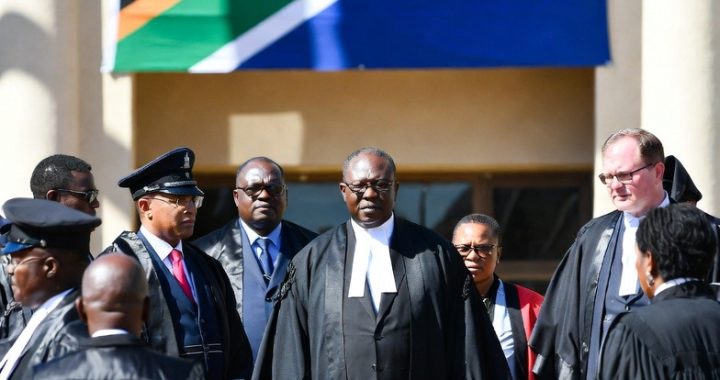 Governing by Court Order: The Rise of Juristocracy in South Africa
  The Quiet Phasing Out of Childcare Institutions
  Zimbabwe’s Economy Improved. The Data Changed. The ZEP Just Kept Getting Extended
  Who Funds Court Rulings?
Interesting! Do you think a ‘Budget Impact Analysis’ is necessary before a judge hands down a verdict in a socioeconomic rights case? Thanks for the info, Lun