The Gaza Deception: How South Africa Helped Empty Palestine
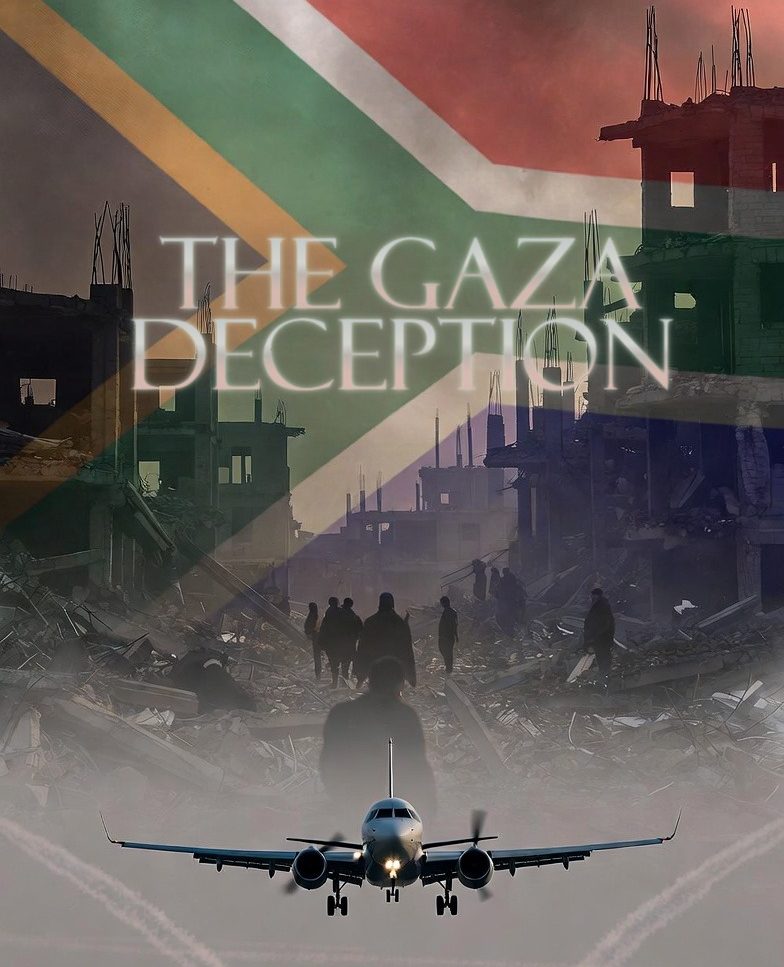
Table of Contents
ToggleSouth Africa’s Intake of Palestinians: The Truth They Don’t Want Us to See
They are all on the same side. It should be obvious by now. The political parties that pretend to hate each other — ANC, DA, EFF — all playing for different teams in public, but behind the curtain they move as one organism. One agenda. One outcome.
This weekend South Africans learned that a group of Palestinian refugees quietly landed at OR Tambo International Airport. My gut tells me this wasn’t the first group, and it won’t be the last. But to understand how we got here, let’s go back.
South Africa took Israel to the International Court of Justice for genocide in Gaza. The world clapped, the media cheered, and the ANC pretended to be moral guardians of humanity. What a joke.
A Brief Reality Check
Jews began settling in Palestine long before the Holocaust, but the 1940s accelerated it. By 1948, after the British Mandate collapsed, the state of Israel was declared. Within 24 hours, five Arab states launched attacks. The chaos displaced 750,000 Palestinians. Egypt was pushed out of Gaza. Nearly a quarter of Mandatory Palestine’s Arab population was squeezed into a tiny strip that makes up 1% of the land.
Today, more than 2.org 2 million Palestinians are trapped there — bombed, starved, and controlled.
I’m summarizing heavily, but the point stands: Gaza has been a pressure cooker for decades.
South Africa’s Performative Morality
So South Africa marched to The Hague claiming Israel was violating the Genocide Convention.
But tell me — on what moral high ground?
This is a country where 80 people are slaughtered every single day.
A country with 20 million people facing food insecurity.
A country where 11,000 children died of starvation in 2024 — not in a war zone, but in peacetime, under an elected government.
How does a government presiding over that level of destruction dare point fingers at anyone else? South Africa had no business taking on this case, not when the ANC is committing its own slow-motion genocide through corruption, neglect, and collapse.
A responsible government acts in the interest of its own Republic.
Tell me: How does the Republic benefit from this ICJ circus?
It doesn’t. Not one bit.
We are a predominantly Christian country. Neither Islam nor Judaism forms the majority here. Yet our government threw us into a centuries-old conflict that offers us nothing. Both religions have expansionist ideological histories — but somehow we picked a side anyway, for reasons that are clearly not rooted in national interest.
The Hypocrisy Is Blinding
We were told the ICJ case was about ending the war.
About justice.
About restoring Palestinian land.
Really?
Because today, instead of helping Palestinians reclaim Gaza, South Africa is helping them evacuate it.
Why?
If the goal was to save Gaza, why is the end result an empty Gaza?
The answer is simple:
That was the point all along.
The Real Agenda
Let’s stop pretending the ANC had a strategy.
They didn’t.
They performed outrage, they screamed “genocide,” and then quietly helped remove Palestinians from Gaza — the exact outcome Israel would prefer.
Look deeper.
The Hegelian Dialectic — thesis, antithesis, synthesis — engineered conflict, fake opposition, predetermined outcome. . It was created by a German philosopher, Georg Wilhelm Friedrich Hegel.
It’s a political tactic older than most of today’s leaders.
The ANC plays the “anti-Israel hero.” Israel plays the villain. The public polarizes. Emotions flare. Politicians perform.
And the synthesis?
Gaza is emptied.
Israel clears space for whatever is planned next.
(And don’t think Trump’s business interests are unrelated — he has never been shy about wanting a slice of anything valuable.)
South Africa ends up absorbing the displaced population, becoming a release valve in a geopolitical strategy we never asked to be part of.
The Parties Pretend to Fight — But They Serve the Same Master
ANC.
DA.
EFF.
Different colours, same puppet strings.
They manufacture outrage, manufacture division, manufacture public distraction — while quietly aligning with global agendas that have nothing to do with the welfare of South Africans.
Do you really think any of them care about Palestinians?
They don’t even care about their own citizens.
And Now We See the Truth
The ICJ case was never about ending genocide.
It was theatre.
A warmup act.
South Africa’s role was simple:
Pretend to fight for Gaza while helping empty Gaza.
Pretend to defend the oppressed while abandoning our own.
Pretend to oppose Israel while ultimately empowering Israel’s long-term plans.
And now? Refugees arrive quietly, drip by drip, and the public is expected to applaud.
We aren’t noble.
We aren’t strategists.
We aren’t saviours.
We are the fools — and they played us perfectly.
About The Author

Lungi Nkosi
Hi, I’m Lungi, the writer and researcher behind Political Nexus. I started this blog because I believe politics and history aren’t just distant, academic subjects — they shape how we live, how we understand the world, and how we imagine the future.
I’m not here to lecture; I’m here to ask questions, share insights, and spark conversations. Whether it’s unpacking a breaking news story, looking back at a key moment in history, or analyzing the choices of today’s leaders, I aim to keep things clear, thoughtful, and engaging.
My interest in politics and history comes from a lifelong curiosity about power — who holds it, how it’s used, and how ordinary people are affected by it. Over the years, I’ve seen how narratives are built, how facts are bent to fit agendas, and how history is used as both a weapon and a guide. That’s why Political Nexus is more than a blog — it’s a space for reflection, inquiry, and conversation.
I write about:
Politics: current events, government decisions, and global trends that affect South Africa and beyond.
History: how past events continue to echo in today’s politics and society.
Media & Narratives: questioning how stories are told, what gets left out, and why.
When I’m not writing, you can usually find me [behind the computer creating stories to tell, exploring books on history and philosophy, debating ideas over coffee with friends, or experimenting with new projects.
At the heart of it, I see myself as a storyteller — one who isn’t afraid to challenge easy answers, ask uncomfortable questions, and look deeper than the surface. My hope is that readers like you walk away from each article not just more informed, but more curious.
So, welcome to Political Nexus. Let’s explore, question, and learn together.
 South Africa Needs a New Electoral System — Not New Parties
  The Erasure of the Native South African
  Rights Without Capacity: Is South Africa Building an Illusion of Delivery?
  Who Funds Court Rulings?
  Media, Rulings & Policy Flow: How Courts Quietly Shape South African Governance
 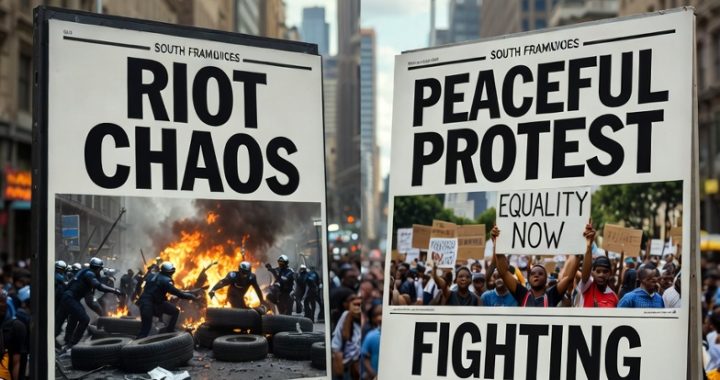 Framing the Nation: How Media Narratives Shape Political Reality in South Africa