When SARS Becomes More Powerful Than the Constitution
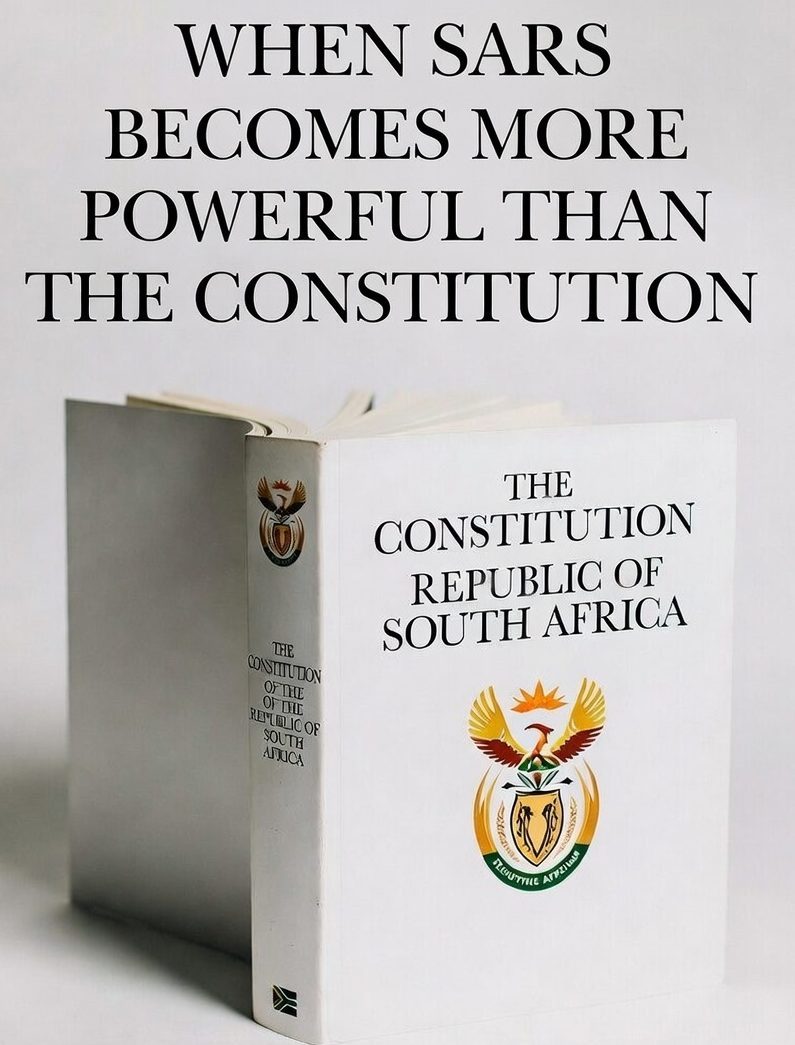
South Africa’s tax authority, SARS, has in recent years dramatically expanded its enforcement capabilities. From direct access to taxpayers’ bank accounts to automated penalties on dormant companies to the increasing use of accounting software and data analytics to estimate VAT liabilities, the state has embraced a more intrusive, technologically sophisticated approach to revenue collection.
In a country facing fiscal pressure, this is often defended as necessary. But necessity is not the same as constitutionality. The real question is not whether SARS may collect taxes — it unquestionably may — but whether the manner in which it now exercises its powers remains consistent with the Constitution’s foundational values of accountability, proportionality, and the rule of law.
The danger is not taxation itself, but taxation divorced from legitimacy.
Table of Contents
ToggleTaxation as a constitutional relationship, not mere power
South Africa’s Constitution does not treat taxation as a brute fact of state authority. It is embedded within a broader constitutional framework that presumes reciprocity between the state and the citizen.
Section 1 establishes accountability, responsiveness, and openness as founding values. Section 195 requires public administration to be ethical, transparent, and answerable. These provisions are not decorative; they form the moral architecture within which all state power, including fiscal power, must operate.
In Fedsure Life Assurance Ltd v Greater Johannesburg Transitional Metropolitan Council (1998), the Constitutional Court held that even when a public body exercises statutory powers — including fiscal powers — it remains bound by constitutional constraints. Lawful authority does not immunise conduct from constitutional scrutiny.
Taxation, therefore, is not simply extraction. It is part of a constitutional bargain: citizens comply, disclose, and pay; the state governs responsibly and accounts for public resources. When that bargain frays, enforcement may remain legal while legitimacy collapses.
One of the most contentious powers exercised by SARS is its ability to recover tax debts directly from taxpayers’ bank accounts, often without prior judicial oversight. While statutory authority exists for such measures, they raise serious concerns under Section 33, which guarantees lawful, reasonable, and procedurally fair administrative action.
In Metcash Trading Ltd v Commissioner for SARS (2001), the Constitutional Court upheld the “pay now, argue later” principle in VAT disputes. However, that judgment is often overstated. The Court did not grant SARS unchecked power; it emphasised the availability of internal remedies, objections, and judicial review as safeguards against abuse.
What has changed since Metcash is scale and automation. Enforcement is increasingly algorithmic, rapid, and financially devastating before meaningful recourse is possible. Accounts may be drained while disputes are unresolved, forcing taxpayers to litigate from a position of financial ruin.
Procedural fairness is not satisfied merely because remedies exist in theory. As the Court held in Dawood v Minister of Home Affairs (2000), administrative power must be exercised in a manner that is reasonable in substance, not merely lawful in form. When enforcement mechanisms effectively punish before adjudication, Section 33 is implicated.
Section 25 protects against arbitrary deprivation of property. Taxation is a recognised limitation, but it is not exempt from constitutional scrutiny. The deprivation must be rational, proportionate, and accompanied by adequate safeguards.
Where SARS relies on estimates, data modelling, or automated determinations — particularly in VAT matters — the risk of arbitrariness increases, and the burden often shifts to the taxpayer to disprove an amount unilaterally determined by the state, at their own cost and over extended periods.
In First National Bank of SA Ltd t/a Wesbank v Commissioner, SARS (2002), the Constitutional Court made clear that even when the state pursues a legitimate purpose, deprivation may still be arbitrary if it lacks proportionality or sufficient procedural protection.
A constitutional democracy cannot permit property to be seized first and justified later without robust safeguards. Otherwise, legality becomes a technicality masking coercion.
The increasing use of accounting software access and data analytics to determine VAT liabilities raises serious concerns under Section 14, which protects the right to privacy.
In Investigating Directorate: Serious Economic Offences v Hyundai Motor Distributors (2001), the Constitutional Court recognised that privacy rights diminish in commercial contexts, but do not disappear. Intrusions must still be justified, targeted, and proportionate.
Continuous or systemic access to internal accounting systems goes beyond traditional audits. It approaches a form of fiscal surveillance, particularly when conducted without individualised suspicion or prior judicial authorisation.
The constitutional problem is not information gathering per se, but scope and imbalance. When the state enjoys expansive visibility into private systems, while citizens have limited visibility into how public funds are used or lost, constitutional symmetry breaks down.
Dormant companies and irrational punishment
The imposition of recurring penalties on dormant companies illustrates a different, but equally troubling, constitutional flaw.
Dormant entities, by definition, are not trading, not generating income, and not evading tax. Penalising non-activity does not correct misconduct; it compels administrative compliance through financial threat.
Under constitutional rationality review, state action must be reasonably related to a legitimate governmental purpose. In Affordable Medicines Trust v Minister of Health (2006), the Court held that even well-intentioned regulation fails constitutional scrutiny if it is disproportionate or irrational in its effect.
Punishment without harm, wrongdoing, or risk mitigation is not regulation — it is revenue extraction under administrative disguise.
.
The accountability vacuum
Perhaps the most serious constitutional defect lies not in any single SARS power, but in asymmetry.
Citizens are compelled to disclose income, maintain records, submit to audits, and tolerate invasive scrutiny. Yet there is no equivalent enforcement mechanism compelling the state to account for billions lost to corruption, waste, and mismanagement.
High-profile findings by the Auditor-General, the Zondo Commission, and investigative journalists demonstrate systemic misuse of public funds. Yet consequences are slow, selective, or absent. Major offenders negotiate, delay, or escape accountability, while compliant taxpayers face swift enforcement.
This imbalance offends the founding values of Section 1 and the accountability requirements of Section 195. A constitutional order cannot survive when enforcement flows only downward.
Legality without legitimacy
SARS may argue, correctly, that it operates within statutory authority. But as the Constitutional Court has repeatedly held, legality is the starting point, not the end, of constitutional analysis.
In Fedsure, the Court warned against confusing power with legitimacy. In Hyundai, it cautioned against unchecked intrusion. In FNB, it insisted on proportionality. Together, these cases underscore a central truth: constitutional compliance is measured by effect, not intent.
When tax enforcement expands faster than accountability, relies on fear rather than fairness, and treats compliance as submission rather than civic duty, it may remain lawful while becoming unconstitutional in effect.
enforcement cannot replace trust
A constitutional democracy cannot fund itself solely through coercion. Tax systems ultimately rely on voluntary compliance rooted in trust — trust that the state governs responsibly, spends ethically, and applies the law equally.
When that trust erodes, enforcement must be restrained, not expanded. Otherwise, the state risks converting taxation from a constitutional obligation into a legitimacy crisis.
South Africa does not suffer from too little enforcement. It suffers from too little accountability. Until that imbalance is addressed, expanding SARS’ powers may secure short-term revenue, but at the cost of long-term constitutional stability.
About The Author

Lungi Nkosi
Hi, I’m Lungi, the writer and researcher behind Political Nexus. I started this blog because I believe politics and history aren’t just distant, academic subjects — they shape how we live, how we understand the world, and how we imagine the future.
I’m not here to lecture; I’m here to ask questions, share insights, and spark conversations. Whether it’s unpacking a breaking news story, looking back at a key moment in history, or analyzing the choices of today’s leaders, I aim to keep things clear, thoughtful, and engaging.
My interest in politics and history comes from a lifelong curiosity about power — who holds it, how it’s used, and how ordinary people are affected by it. Over the years, I’ve seen how narratives are built, how facts are bent to fit agendas, and how history is used as both a weapon and a guide. That’s why Political Nexus is more than a blog — it’s a space for reflection, inquiry, and conversation.
I write about:
Politics: current events, government decisions, and global trends that affect South Africa and beyond.
History: how past events continue to echo in today’s politics and society.
Media & Narratives: questioning how stories are told, what gets left out, and why.
When I’m not writing, you can usually find me [behind the computer creating stories to tell, exploring books on history and philosophy, debating ideas over coffee with friends, or experimenting with new projects.
At the heart of it, I see myself as a storyteller — one who isn’t afraid to challenge easy answers, ask uncomfortable questions, and look deeper than the surface. My hope is that readers like you walk away from each article not just more informed, but more curious.
So, welcome to Political Nexus. Let’s explore, question, and learn together.
 Rights Without Capacity: Is South Africa Building an Illusion of Delivery?
  Who Funds Court Rulings?
  Media, Rulings & Policy Flow: How Courts Quietly Shape South African Governance
 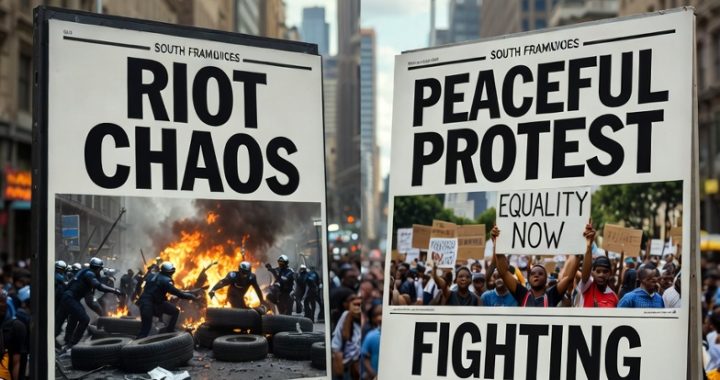 Framing the Nation: How Media Narratives Shape Political Reality in South Africa
 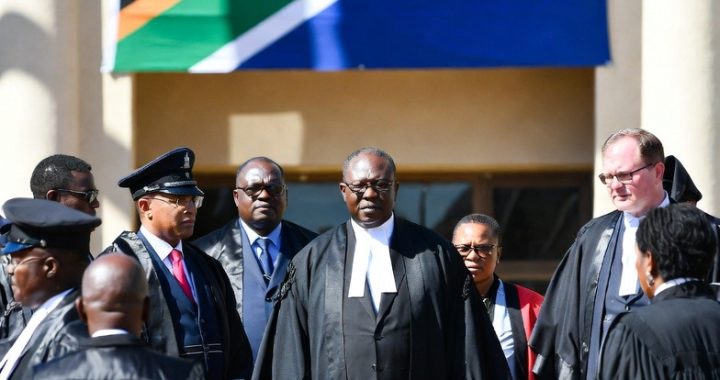 Governing by Court Order: The Rise of Juristocracy in South Africa
  The Quiet Phasing Out of Childcare Institutions