Governing by Court Order: The Rise of Juristocracy in South Africa
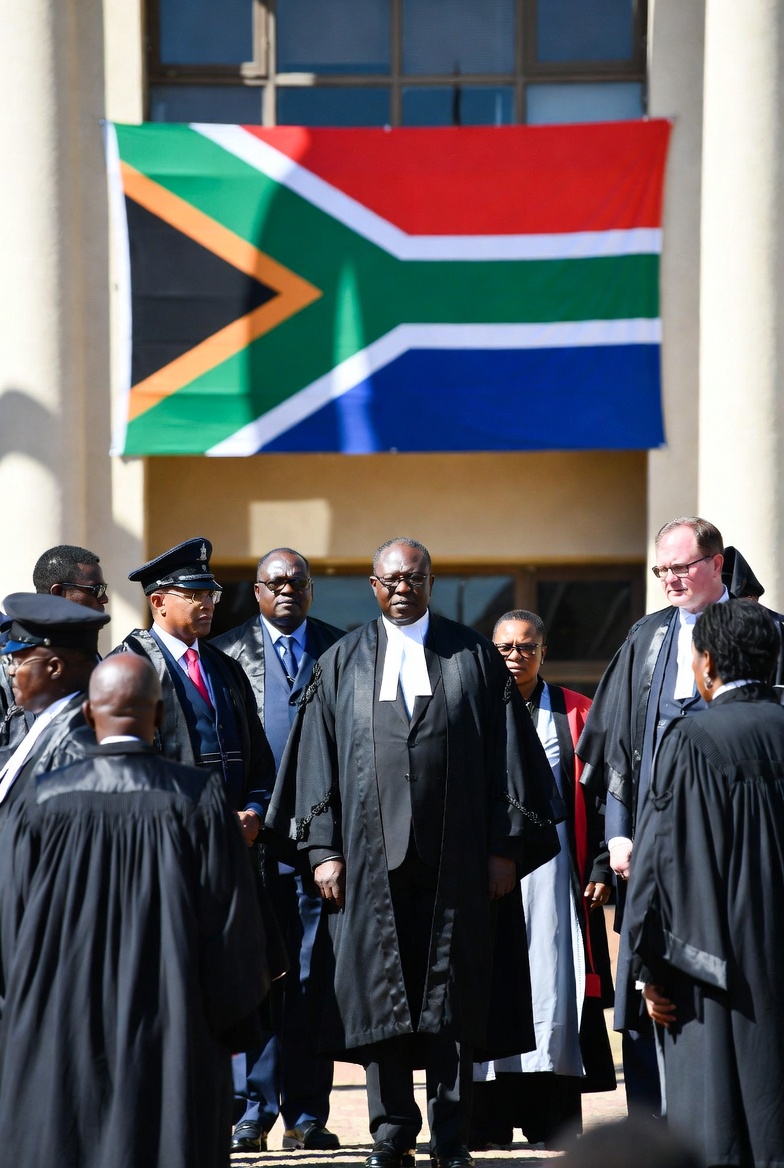
Table of Contents
ToggleThe Quiet Shift in Power
In constitutional democracies, courts are traditionally viewed as arbiters — institutions that interpret and apply the law rather than create or administer it. Yet in contemporary South Africa, the judiciary’s role appears to be expanding beyond interpretation into areas that carry direct governance consequences.
From immigration enforcement to housing evictions, social grant distribution, and energy regulation, courts are increasingly issuing rulings that not only clarify legal questions but also shape policy implementation itself. This shift has prompted renewed scholarly and political debate over whether South Africa is drifting toward what political scientists term a juristocracy — a system in which courts exercise substantial governing power.
This question is not about judicial legitimacy, but about institutional balance: where should the boundary lie between constitutional guardianship and democratic governance?
The term juristocracy was popularised by legal scholar Ran Hirschl to describe systems where courts become central policymakers rather than peripheral adjudicators. In juristocratic systems, major political and social questions are increasingly settled through litigation rather than electoral or legislative processes.
Globally, this phenomenon has been observed in jurisdictions such as Israel, the United States, India, and Brazil, where constitutional courts routinely decide on matters ranging from electoral law to economic policy and administrative governance.
Juristocracy does not imply judicial overreach per se. Rather, it reflects a structural condition in which courts become arenas for resolving governance disputes that political institutions either cannot or will not settle.
South Africa’s constitutional framework arguably lends itself to robust judicial authority.
Section 2 of the Constitution establishes constitutional supremacy, declaring that any law or conduct inconsistent with the Constitution is invalid. This creates a legal hierarchy in which courts hold the authority to invalidate executive and legislative action.
Section 172 further empowers courts to make “any order that is just and equitable” when deciding constitutional matters. This clause is particularly significant, as it allows courts to craft structural remedies — orders that go beyond striking down laws and instead direct the state to take specific actions.
Additionally, Section 38 grants broad standing, enabling individuals, groups, and organisations to approach courts when constitutional rights are threatened. This expansive access fuels public interest litigation, often placing courts at the centre of governance disputes.
In the post‑apartheid context, these powers were intentionally designed. Having emerged from a system where parliamentary sovereignty enabled rights abuses, constitutional drafters vested courts with strong review authority as a safeguard against executive excess.
- Immigration and Executive Authority
In Helen Suzman Foundation v Minister of Home Affairs and subsequent litigation surrounding the Zimbabwe Exemption Permit (ZEP), courts intervened in executive immigration decisions, halting terminations and requiring procedural reconsideration.
While the judiciary did not create immigration policy, its rulings materially affected enforcement timelines, administrative processes, and the legal status of permit holders — effectively shaping migration governance outcomes.
- Housing and Evictions
In Government of the Republic of South Africa v Grootboom (2000), the Constitutional Court ruled that the state had failed to discharge its obligation under Section 26 of the Constitution (the right to housing). The Court ordered the government to design and implement a reasonable housing programme that included emergency accommodation.
Here, the judiciary did not simply interpret housing rights — it compelled policy redesign and resource allocation.
Similarly, in Occupiers of 51 Olivia Road v City of Johannesburg (2008), the Court required meaningful engagement between the state and residents before eviction, embedding procedural governance standards into housing administration.
- Social Grants Administration
In Black Sash Trust v Minister of Social Development (2017), the Constitutional Court intervened in the social grants crisis involving SASSA and Cash Paymaster Services.
Invoking its Section 172 powers, the Court supervised the continuation of grant payments. It retained oversight jurisdiction — an extraordinary measure that placed the judiciary in a quasi-administrative supervisory role to prevent welfare disruption affecting millions.
- Energy and Load Shedding Litigation
Recent litigation against Eskom and the state over load shedding has sought judicial orders to exempt critical infrastructure such as hospitals and schools from power cuts.
While courts have approached these matters cautiously, the mere fact that energy allocation disputes are being litigated reflects how governance failures migrate into judicial forums.
The Democratic Tension
At the heart of juristocracy debates lies a core democratic question:
Should unelected judges make decisions with national policy consequences?
Judges lack electoral mandates, fiscal accountability, and administrative machinery. Yet their rulings can compel budget shifts, halt executive programmes, or impose operational duties on the state.
Supporters argue that constitutional supremacy necessitates this power. Critics counter that policy trade-offs — particularly those involving budgets — belong to elected branches.
This tension is not unique to South Africa but is amplified by the country’s transformative constitutionalism, which embeds socio-economic rights that are directly enforceable in court.
Drivers of Judicial Expansion
South Africa’s judicial prominence does not arise in a vacuum. Several structural drivers are at play:
- Executive Incapacity
Administrative dysfunction, corruption, and governance backlogs often invite litigation as a corrective mechanism. - Legislative Gaps
Where Parliament fails to update or clarify statutory frameworks, courts are asked to interpret outdated or ambiguous laws. - Civil Society Litigation
A robust NGO and public-interest legal sector actively uses the courts to advance rights-based claims. - Rights-Based Constitutionalism
The justiciability of housing, healthcare, education, and welfare rights structurally positions courts within policy enforcement.
In this sense, judicial expansion may be less about ambition and more about institutional substitution — courts filling governance vacuums.
Risks Associated with Juristocracy
While judicial intervention can protect rights, sustained governance by court order carries systemic risks:
Policy Paralysis — Executives may delay decisions in anticipation of litigation.
Budgetary Intrusion — Court-mandated programmes can disrupt fiscal planning.
Legitimacy Strain — Courts risk politicisation when drawn into policy battles.
Institutional Overload — Judges adjudicate disputes but lack implementation capacity.
These risks raise concerns about long-term institutional equilibrium.
Counterargument: Courts as Constitutional Guardians
Any critique of juristocracy must contend with South Africa’s historical context.
Courts have played decisive roles in:
- Enforcing anti-corruption measures
- Protecting electoral integrity
- Safeguarding minority rights
- Compelling service delivery compliance
In Economic Freedom Fighters v Speaker of the National Assembly (the Nkandla case, 2016), the Constitutional Court affirmed that the Public Protector’s remedial actions were binding, thereby reinforcing executive accountability.
Here, judicial intervention strengthened — rather than supplanted — democratic governance.
Governance by Gavel?
South Africa’s judiciary operates within a constitutional architecture that deliberately empowers it to act as a check on political power. Yet as courts increasingly shape administrative timelines, welfare systems, housing policy, and immigration enforcement, the line between adjudication and governance blurs.
Whether this trajectory constitutes juristocracy depends largely on interpretation. It may signal judicial overreach — or institutional resilience in the face of executive fragility.
What remains clear is that South Africa’s constitutional project has not confined courts to the margins of governance. Instead, it has positioned them as active custodians of the state’s moral and legal commitments.
The enduring question is not whether courts govern — but whether they are being asked to govern too much.
Read Next When SARS Becomes More Powerful Than the Constitution
About The Author

Lungi Nkosi
Hi, I’m Lungi, the writer and researcher behind Political Nexus. I started this blog because I believe politics and history aren’t just distant, academic subjects — they shape how we live, how we understand the world, and how we imagine the future.
I’m not here to lecture; I’m here to ask questions, share insights, and spark conversations. Whether it’s unpacking a breaking news story, looking back at a key moment in history, or analyzing the choices of today’s leaders, I aim to keep things clear, thoughtful, and engaging.
My interest in politics and history comes from a lifelong curiosity about power — who holds it, how it’s used, and how ordinary people are affected by it. Over the years, I’ve seen how narratives are built, how facts are bent to fit agendas, and how history is used as both a weapon and a guide. That’s why Political Nexus is more than a blog — it’s a space for reflection, inquiry, and conversation.
I write about:
Politics: current events, government decisions, and global trends that affect South Africa and beyond.
History: how past events continue to echo in today’s politics and society.
Media & Narratives: questioning how stories are told, what gets left out, and why.
When I’m not writing, you can usually find me [behind the computer creating stories to tell, exploring books on history and philosophy, debating ideas over coffee with friends, or experimenting with new projects.
At the heart of it, I see myself as a storyteller — one who isn’t afraid to challenge easy answers, ask uncomfortable questions, and look deeper than the surface. My hope is that readers like you walk away from each article not just more informed, but more curious.
So, welcome to Political Nexus. Let’s explore, question, and learn together.
 Rights Without Capacity: Is South Africa Building an Illusion of Delivery?
  Who Funds Court Rulings?
  Media, Rulings & Policy Flow: How Courts Quietly Shape South African Governance
 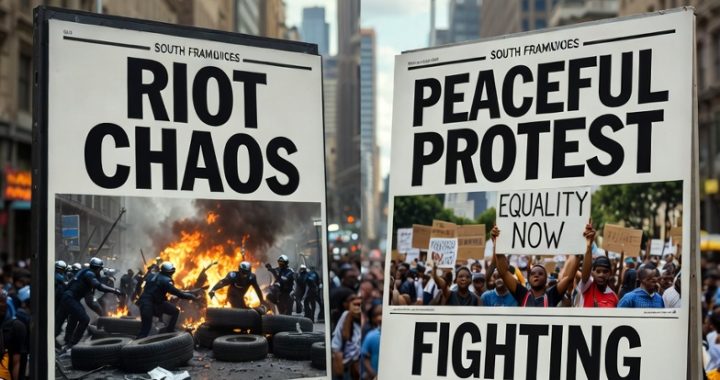 Framing the Nation: How Media Narratives Shape Political Reality in South Africa
 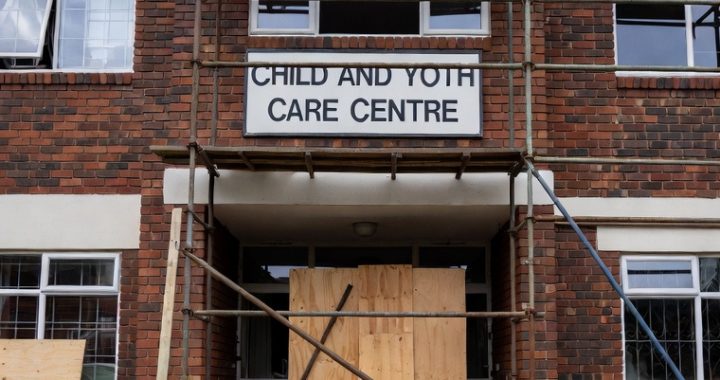 The Quiet Phasing Out of Childcare Institutions
  Zimbabwe’s Economy Improved. The Data Changed. The ZEP Just Kept Getting Extended
1 thought on “Governing by Court Order: The Rise of Juristocracy in South Africa”