The Erasure of the Native South African
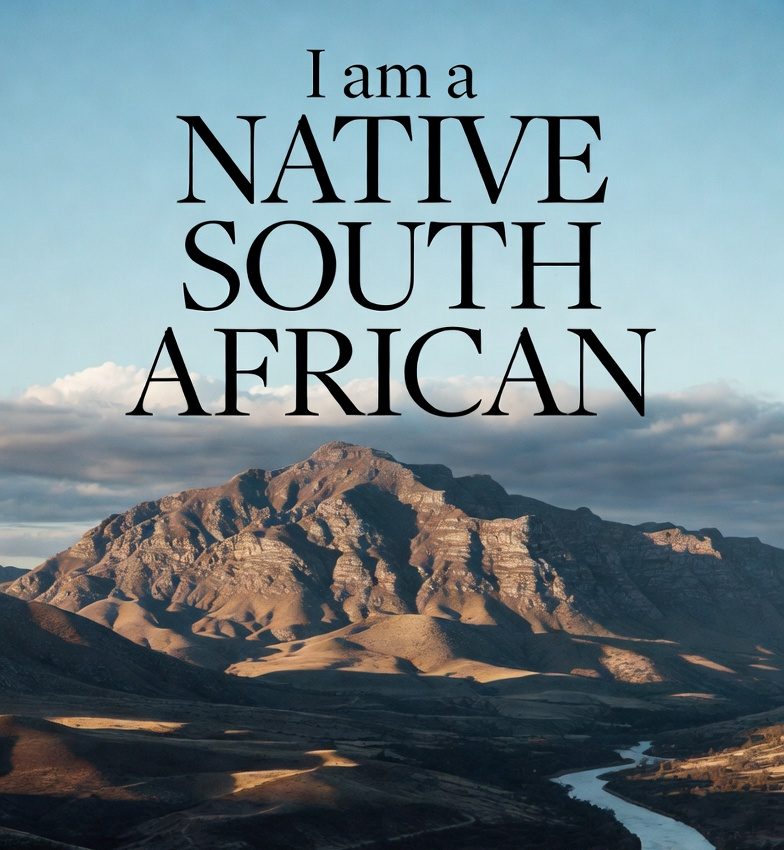
I am a Native of South Africa — that is who I am first. I can trace my lineage five generations back to Barberton, Mpumalanga. The word Native describes me more accurately than the labels “Black” or “African.” It connects me to a history, a people, a land, and a legacy that is uniquely mine.
So I ask myself: Why was this term taken away from us? Who had the authority to decide on our behalf? When was the last time you heard any politician refer to us as Natives of South Africa? Why must I feel as if I’m doing something wrong by simply wanting the term “Native South African” to appear on forms again? Why must I apologise for wanting to be called by the name that aligns with my lineage?
There is a clear and essential difference between African and Native South African.
“African” is a broad, continental identity. It refers to anyone born on the continent — all 54 countries, all cultures, all languages, all histories. But Africans are not one homogenous group. We do not look the same, speak the same languages, share the same traditions, or even eat the same foods. So why is there such a push to group us under one vague label?
A Native South African is a very specific term.
It refers to those whose ancestors are indigenous to this land, whose lineage runs deep across centuries, and who carry the oral traditions, clan histories, tribal identities, and cultural memory of South Africa. It is someone with a historical birthright to this land — someone whose existence is tied to the soil long before colonial borders were drawn.
Why should we surrender that identity?
Why should we allow it to be erased in favour of a political project that folds everyone into a continental category? Why must we conform to a Pan-African ideal that benefits the ideology more than it benefits the people?
Before the word “Black” was imposed on us, before the term “African” became fashionable, Europeans referred to us — correctly and respectfully — as Natives. I am not a colour. I am not “black”; my skin tone does not even resemble black. And while I may be African geographically, that does not describe the whole truth about who I am. The accurate term is Native South African.
So then, who decided that we must all be called African?
You guessed it — the communist ANC. Part of the communist agenda is to break down national identity.
Communism thrives when nations dissolve into vague collectives without borders, without distinctions, without historical ties to land. Identity dilution is not an accident; it is a strategy.
This is not new.
The same ideological shift happened in America during the civil rights era. W.E.B. Du Bois, a Pan-Africanist and Marxist intellectual, pushed the term “African American,” erasing the unique history of Black Americans — their enslaved ancestors, their 400-year development on American soil, and their specific cultural identity. Suddenly, their story was no longer an American one; it was tied to a continent with which many had no ancestral ties.
So again, the question becomes: Why did we agree to this?
Why did we simply accept labels designed to generalise us, flatten our identity, and merge us into a political collective instead of preserving our specific heritage?
It is essential to understand that identity is not just a word — it is a form of memory.
When you remove a people’s name for themselves, you remove their ability to assert their history.
You weaken their claim to their land.
You dilute their cultural continuity.
You open the door for confusion, manipulation, and political rewriting.
“African” tells you nothing about who I am.
“Native South African” tells you everything — where my people lived, what shaped our worldview, what traditions raised me, and which land my ancestors walked.
A nation cannot function when the identity of its indigenous people is blurred into a category that includes millions who have no ancestral connection to this country. No European country does this. No Asian country does this. Only Africans are told to abandon their national identity and embrace a borderless label.
Why?
Who benefits when we lose our name?
It certainly isn’t the people whose history is erased.
If we want to preserve our heritage, protect our culture, honour our ancestors, and maintain our rightful connection to this land, then the terminology must reflect the truth. Reclaiming the term “Native South African” is not divisive; it is restorative.
This is not about excluding anyone.
It is about naming ourselves correctly.
It is about holding onto what is ours.
It is about refusing to let political ideology rewrite our identity.
We deserve the right to call ourselves what we truly are.
And I, for one, am done allowing others to define me.
I am a Native of South Africa, and I will not apologise for saying so.
Read Next Did The Media Lie About Elvis Nyathi?
Table of Contents
ToggleAbout The Author

Lungi Nkosi
Hi, I’m Lungi, the writer and researcher behind Political Nexus. I started this blog because I believe politics and history aren’t just distant, academic subjects — they shape how we live, how we understand the world, and how we imagine the future.
I’m not here to lecture; I’m here to ask questions, share insights, and spark conversations. Whether it’s unpacking a breaking news story, looking back at a key moment in history, or analyzing the choices of today’s leaders, I aim to keep things clear, thoughtful, and engaging.
My interest in politics and history comes from a lifelong curiosity about power — who holds it, how it’s used, and how ordinary people are affected by it. Over the years, I’ve seen how narratives are built, how facts are bent to fit agendas, and how history is used as both a weapon and a guide. That’s why Political Nexus is more than a blog — it’s a space for reflection, inquiry, and conversation.
I write about:
Politics: current events, government decisions, and global trends that affect South Africa and beyond.
History: how past events continue to echo in today’s politics and society.
Media & Narratives: questioning how stories are told, what gets left out, and why.
When I’m not writing, you can usually find me [behind the computer creating stories to tell, exploring books on history and philosophy, debating ideas over coffee with friends, or experimenting with new projects.
At the heart of it, I see myself as a storyteller — one who isn’t afraid to challenge easy answers, ask uncomfortable questions, and look deeper than the surface. My hope is that readers like you walk away from each article not just more informed, but more curious.
So, welcome to Political Nexus. Let’s explore, question, and learn together.
 South Africa Needs a New Electoral System — Not New Parties
  The Gaza Deception: How South Africa Helped Empty Palestine
  Rights Without Capacity: Is South Africa Building an Illusion of Delivery?
  Who Funds Court Rulings?
 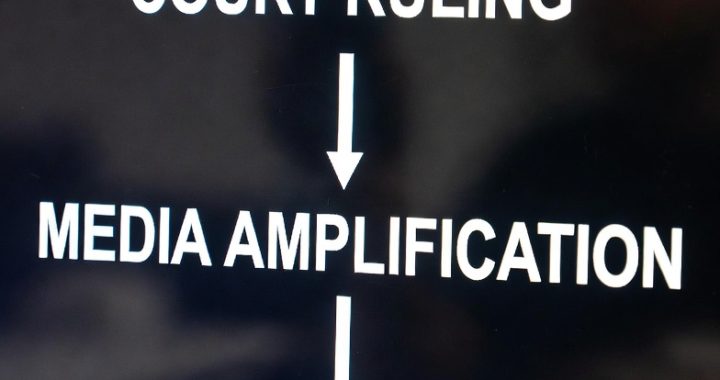 Media, Rulings & Policy Flow: How Courts Quietly Shape South African Governance
 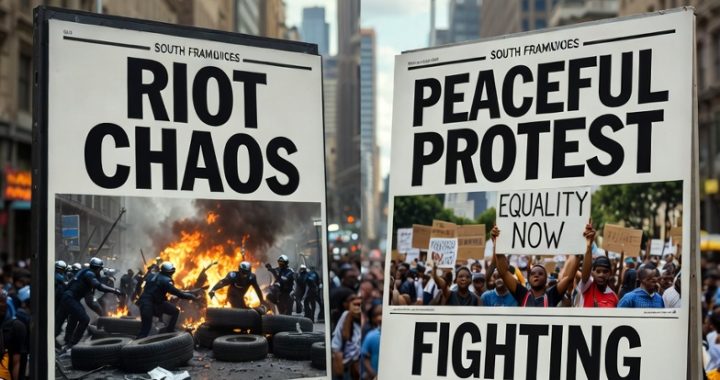 Framing the Nation: How Media Narratives Shape Political Reality in South Africa