Rights Without Capacity: Is South Africa Building an Illusion of Delivery?

Table of Contents
ToggleCourts Mandate. Treasury Funds. But Can a Politicized State Deliver?
In this series, we have traced how South Africa’s governance ecosystem functions beyond the ballot box.
Courts interpret the Constitution and expand the scope of enforceable rights.
Media frames and legitimise those rulings.
Treasury absorbs the fiscal consequences.
Taxpayers ultimately fund compliance.
But there is one final and unavoidable question:
Who actually implements these mandates?
Because rights do not build houses.
Judgments do not purify water.
Budgets do not administer schools.
The administrative state does.
And that brings us to the issue of cadre deployment — and state capacity.
Cadre deployment refers to the practice of placing party-aligned individuals into strategic positions within the state.
Its defenders argue it ensures ideological alignment and policy coherence. If elected, leaders must implement a political program; they require trusted personnel in key administrative posts.
Its critics argue the opposite: that prioritising political loyalty over professional merit weakens state capacity and erodes institutional independence.
The issue is not whether political appointments exist — they do in many democracies. The issue is scale and depth.
When deployment extends deep into administrative layers — beyond political executives into technical and managerial roles — the distinction between governance and party blurs.
And when technical expertise becomes secondary, implementation suffers
The Capacity Question
South Africa does not struggle with constitutional clarity.
It struggles with execution.
Municipal audit outcomes repeatedly show financial mismanagement and irregular expenditure. Water infrastructure collapses not because the Constitution is vague, but because maintenance systems fail. Housing backlogs persist despite budget allocations.
The gap is not always legal. It is administrative.
When courts expand rights — whether in housing, education, healthcare or immigration access — departments must respond with plans, budgets, and measurable progress.
If those departments lack stable, technically competent leadership, compliance becomes reactive and fragile.
Officials rotate. Skills drain. Institutional memory evaporates.
Policy becomes announcement. Delivery becomes an aspiration.
A Governance Feedback Loop
Here is where the system becomes complex.
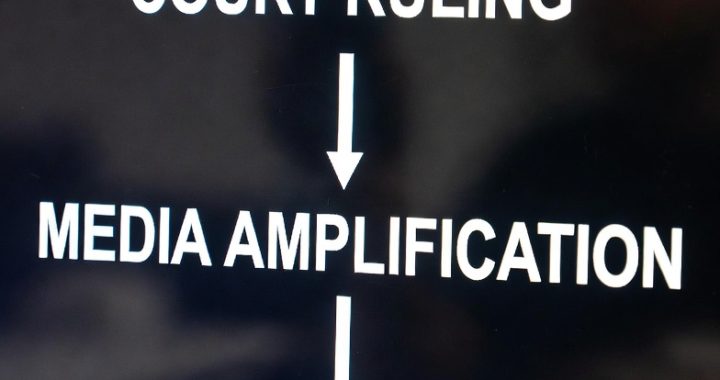
- Courts issue a ruling expanding or enforcing rights.
- Media amplifies the judgment and frames it as a moral or constitutional imperative.
- Treasury allocates funding to ensure compliance.
- Departments must implement.
If implementation falters, litigation returns.
Courts intervene again.
More supervision. More reporting requirements. More fiscal allocation.
What emerges is a feedback loop between the judiciary and the executive — mediated by the media — in which administrative weakness invites judicial expansion.
In this cycle, the root problem is rarely examined: capacity.
The tension is not abstract.
When senior officials are appointed primarily for political alignment rather than demonstrated technical expertise, several risks emerge:
- Procurement irregularities
- Delays in project execution
- Weak oversight of contractors
- Failure to meet court-ordered deadlines
- Increased reliance on consultants
This does not mean every deployed official lacks skill. Many are competent professionals.
But systemic incentives matter.
If career advancement depends more on political loyalty than performance metrics, institutional culture shifts. Risk-avoidance replaces innovation. Reporting replaces delivery.
And when courts demand measurable compliance, departments scramble.
The Democratic Paradox
Here is the uncomfortable truth.
Judges are not elected.
Treasury officials do not campaign.
Senior administrators do not face voters.
Yet together, they shape how rights are realised in everyday life.
If cadre deployment weakens administrative competence, and courts expand enforceable rights, and Treasury reallocates budgets to comply, then democratic accountability becomes diffused.
When water fails to flow, voters blame “government.”
But which part?
The judge who ordered reform?
The Treasury that reallocated funds?
The department that failed to implement?
The party that deployed its loyalists?
Responsibility fragments.
Accountability blurs.
Capacity as Constitutional Infrastructure
A constitution does not implement itself.
Its success depends on what scholars call “state capacity” — the ability of public institutions to design, finance, and execute policy effectively.
Without capacity:
- Rights become litigation cycles.
- Budgets become reactive reallocations.
- Public trust erodes.
Cadre deployment, in this context, is not merely a political strategy. It becomes a structural variable affecting constitutional durability.
If appointments prioritise loyalty over competence, implementation gaps widen.
And when implementation gaps widen, courts intervene.
And when courts intervene, policy shifts.
The cycle intensifies.
Is There a Middle Ground?
Some argue that political alignment is necessary for transformative governance. Others insist on strict meritocracy insulated from party influence.
The real question may be balance.
Can South Africa build a professional civil service that is politically accountable at the top, but technically insulated below?
Can deployment be limited to strategic leadership roles while technical posts remain merit-based?
Can performance metrics outweigh factional allegiance?
These are not abstract governance debates.
They determine whether constitutional rights materialise in pipes, classrooms, clinics and houses — or remain in law reports.
The Final Tension
In this series, we have examined how legality, media framing, fiscal allocation and taxpayer burden interact.
Cadre deployment introduces the final stress test:
Even if courts mandate.
Even if the media legitimises.
Even if Treasury funds.
Can the state deliver?
If the answer is uncertain, then the debate is no longer ideological.
It is structural.
South Africa’s democratic architecture depends not only on who governs, but on how competently the machinery of governance operates.
Rights without capacity are promises without delivery.
And in a constitutional democracy, promises without delivery eventually become political instability.
The question is no longer whether rights should be enforced.
The question is whether the state has the institutional strength to enforce them consistently, competently, and accountably.
Because if it does not, then the true crisis is not judicial activism or fiscal strain.
It is administrative fragility.
And that fragility may be the most decisive political issue of all.
Read Next SADTU in the Elections: The Hidden Risk to Democratic Neutrality
About The Author

Lungi Nkosi
Hi, I’m Lungi, the writer and researcher behind Political Nexus. I started this blog because I believe politics and history aren’t just distant, academic subjects — they shape how we live, how we understand the world, and how we imagine the future.
I’m not here to lecture; I’m here to ask questions, share insights, and spark conversations. Whether it’s unpacking a breaking news story, looking back at a key moment in history, or analyzing the choices of today’s leaders, I aim to keep things clear, thoughtful, and engaging.
My interest in politics and history comes from a lifelong curiosity about power — who holds it, how it’s used, and how ordinary people are affected by it. Over the years, I’ve seen how narratives are built, how facts are bent to fit agendas, and how history is used as both a weapon and a guide. That’s why Political Nexus is more than a blog — it’s a space for reflection, inquiry, and conversation.
I write about:
Politics: current events, government decisions, and global trends that affect South Africa and beyond.
History: how past events continue to echo in today’s politics and society.
Media & Narratives: questioning how stories are told, what gets left out, and why.
When I’m not writing, you can usually find me [behind the computer creating stories to tell, exploring books on history and philosophy, debating ideas over coffee with friends, or experimenting with new projects.
At the heart of it, I see myself as a storyteller — one who isn’t afraid to challenge easy answers, ask uncomfortable questions, and look deeper than the surface. My hope is that readers like you walk away from each article not just more informed, but more curious.
So, welcome to Political Nexus. Let’s explore, question, and learn together.
 Who Funds Court Rulings?
  Media, Rulings & Policy Flow: How Courts Quietly Shape South African Governance
  Framing the Nation: How Media Narratives Shape Political Reality in South Africa
  Governing by Court Order: The Rise of Juristocracy in South Africa
  The Quiet Phasing Out of Childcare Institutions
  Zimbabwe’s Economy Improved. The Data Changed. The ZEP Just Kept Getting Extended
  Rights Without Capacity: Is South Africa Building an Illusion of Delivery?