Framing the Nation: How Media Narratives Shape Political Reality in South Africa
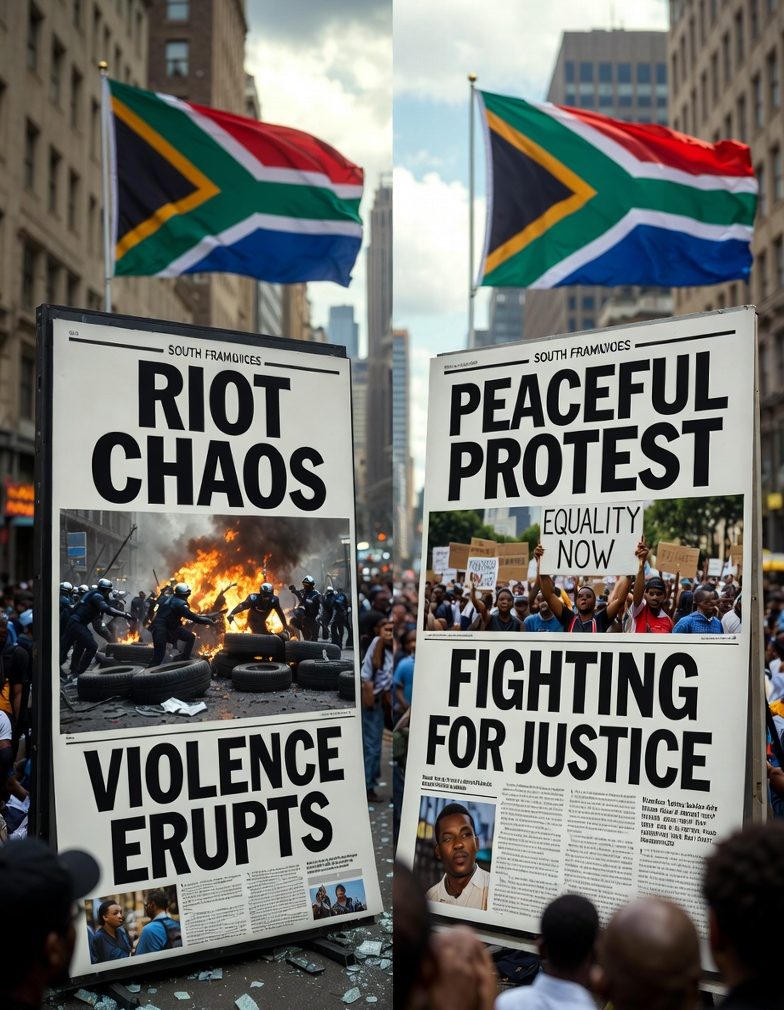
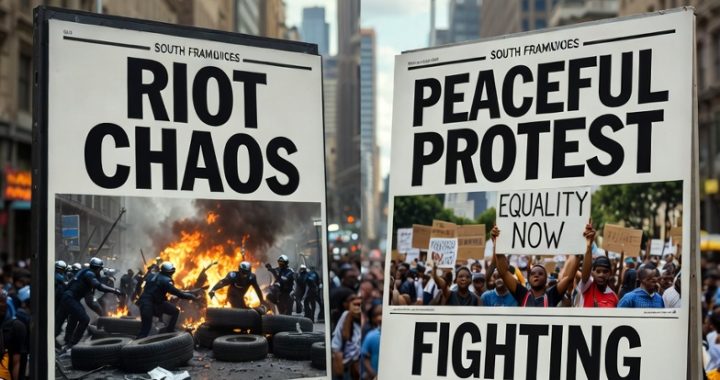
n democratic societies, the media is often described as the “fourth estate” — an institutional pillar tasked with informing the public and holding power to account. Yet beyond reporting events, media institutions also perform a subtler function: they shape the interpretive frameworks through which citizens understand political reality. Through selection, emphasis, and narrative construction, media framing influences how the public assigns blame, legitimacy, urgency, and moral weight to national developments.
In South Africa — a society marked by deep inequality, historical trauma, and institutional contestation — narrative framing carries particular political power. The issue is not whether the media reports facts, but how those facts are prioritised, contextualised, and linguistically presented to the public.
Table of Contents
ToggleMedia Framing as Institutional Power
Media framing refers to the process by which certain aspects of reality are foregrounded while others are backgrounded. This occurs through:
Headline construction
Source selection
Language choice
Context inclusion or omission
Visual imagery
These editorial decisions shape audience perception long before readers engage in independent analysis.
Framing does not require factual inaccuracy. It operates through emphasis hierarchy — determining which truths appear most politically relevant.
Case Study 1: The Murder of Elvis Nyathi
In 2022, the killing of Zimbabwean national Elvis Nyathi in Diepsloot drew widespread national and international media coverage.
Dominant Narrative Frame
Early reporting overwhelmingly foregrounded xenophobia as the central explanatory lens. Headlines emphasised:
Anti-immigrant violence
Mob brutality
Nationality-based targeting
This framing positioned the incident primarily as an expression of societal prejudice.
Contextual Layers Less Emphasised
Subsequent reporting introduced additional factors:
Community crime grievances
Protests over policing failures
Tensions linked to criminality allegations
While these dynamics were reported, they appeared later in the news cycle and with less headline prominence.
Framing Effect
The emphasis hierarchy shaped public discourse in specific ways:
| Foregrounded Frame | Public Interpretation |
|---|---|
| Xenophobia | Moral crisis |
| Mob violence | Social pathology |
| Nationality focus | Identity conflict |
Meanwhile, governance failures — particularly policing capacity — received comparatively less narrative centrality.
The case illustrates how framing can shift perceived causality from institutional dysfunction to societal prejudice.
Case Study 2: Jacob Zuma and the July 2021 Unrest
The imprisonment of former President Jacob Zuma for contempt of court triggered widespread unrest across KwaZulu-Natal and Gauteng.
Competing Narrative Frames
Media coverage broadly clustered around two dominant interpretations:
1. Rule of Law Frame
The judiciary defending constitutional supremacy.
2. Insurrection Frame
Organised political sabotage aimed at destabilisation.
These frames emphasised political and constitutional stakes.
Secondary Frames
Less dominant — though still present — were socio-economic interpretations:
Poverty-driven looting
Food insecurity
Lockdown economic distress
Intelligence failures
Narrative Consequence
Framing influenced how audiences understood the unrest:
| Frame | Perceived Cause |
|---|---|
| Insurrection | Political conspiracy |
| Rule of law backlash | Institutional resistance |
| Socio-economic unrest | Structural inequality |
The prioritisation of political frames over economic ones shaped accountability discourse — focusing on factional politics rather than governance capacity.
Case Study 3: Cyril Ramaphosa and the Phala Phala Controversy
The theft of foreign currency from President Ramaphosa’s private farm generated sustained media attention.
Divergent Framing Lenses
Ethical Legitimacy Frame
Why was foreign currency stored privately?
Transparency concerns
Anti-corruption optics
Procedural Legality Frame
Exchange control compliance
Reporting timelines
Legal thresholds for wrongdoing
Framing Divergence
Investigative outlets tended to foreground ethical legitimacy, while legal analysts emphasised procedural compliance.
Interpretive Impact
Audience conclusions varied accordingly:
| Frame Emphasis | Political Effect |
|---|---|
| Ethical breach | Leadership credibility erosion |
| Legal technicalities | Institutional process debate |
The case demonstrates how identical facts can produce divergent political meanings depending on narrative weighting.
Case Study 4: Immigration Enforcement and Herman Mashaba
Public discourse surrounding immigration enforcement offers another example of framing power.
Dominant Media Lens
Coverage frequently situates enforcement rhetoric within:
Human rights discourse
Xenophobia risk analysis
Populism comparisons
Under-weighted Policy Context
Less emphasised — though still relevant — are governance pressures such as:
Municipal service strain
Informal settlement expansion
Labour market competition
Border control capacity
Framing Outcome
Debate shifts from administrative feasibility to moral legitimacy — altering the terrain of policy discussion.
Language as a Framing Instrument
Beyond event selection, language itself shapes emotional interpretation.
Consider descriptive variations:
| Descriptor | Audience Response |
|---|---|
| “Mob” | Criminal illegitimacy |
| “Protesters” | Political agency |
| “Activists” | Moral legitimacy |
| “Illegal miners” vs “Artisanal miners” | Criminality vs livelihood framing |
Word choice functions as interpretive shorthand, guiding readers toward implicit judgments.
Service delivery protests provide a systemic framing example.
Dominant Coverage Patterns
Visual and headline focus often includes:
Burning tyres
Road blockades
Property destruction
Police confrontation
This foregrounds disorder and public disruption.
Structural Context
Underlying drivers frequently include:
Water shortages
Housing backlogs
Electricity failures
Municipal corruption
When these appear as secondary context, public interpretation skews toward lawlessness rather than governance distress.
Media framing also operates through agenda-setting — determining which issues dominate national conversation.
Sustained coverage elevates political urgency, while limited coverage reduces perceived importance.
This hierarchy influences:
Policy prioritisation
Electoral discourse
Public outrage cycles
In this way, narrative power interacts with democratic accountability.
Structural Constraints on Media Framing
A critical analysis must also acknowledge institutional pressures shaping media output:
Commercial viability
Audience analytics
Time constraints
Editorial ideology
Source accessibility
Framing is therefore not solely ideological — it is also structural and economic.
Narrative Power in Democratic Societies
South Africa’s media landscape plays a central role in democratic life — exposing corruption, scrutinising power, and informing citizens. Yet its influence extends beyond reportage into narrative construction.
Through framing, emphasis, and language selection, media institutions shape how political reality is interpreted — influencing where society directs outrage, empathy, and accountability.
The question is not whether media frames events — all media systems do. The institutional question is how framing hierarchies interact with governance debates, public perception, and democratic legitimacy.
In a constitutional democracy, power does not reside only in legislatures, executives, or courts. It also resides in the institutions that shape how citizens understand them.
Read next Governing by Court Order: The Rise of Juristocracy in South Africa
About The Author

Lungi Nkosi
Hi, I’m Lungi, the writer and researcher behind Political Nexus. I started this blog because I believe politics and history aren’t just distant, academic subjects — they shape how we live, how we understand the world, and how we imagine the future.
I’m not here to lecture; I’m here to ask questions, share insights, and spark conversations. Whether it’s unpacking a breaking news story, looking back at a key moment in history, or analyzing the choices of today’s leaders, I aim to keep things clear, thoughtful, and engaging.
My interest in politics and history comes from a lifelong curiosity about power — who holds it, how it’s used, and how ordinary people are affected by it. Over the years, I’ve seen how narratives are built, how facts are bent to fit agendas, and how history is used as both a weapon and a guide. That’s why Political Nexus is more than a blog — it’s a space for reflection, inquiry, and conversation.
I write about:
Politics: current events, government decisions, and global trends that affect South Africa and beyond.
History: how past events continue to echo in today’s politics and society.
Media & Narratives: questioning how stories are told, what gets left out, and why.
When I’m not writing, you can usually find me [behind the computer creating stories to tell, exploring books on history and philosophy, debating ideas over coffee with friends, or experimenting with new projects.
At the heart of it, I see myself as a storyteller — one who isn’t afraid to challenge easy answers, ask uncomfortable questions, and look deeper than the surface. My hope is that readers like you walk away from each article not just more informed, but more curious.
So, welcome to Political Nexus. Let’s explore, question, and learn together.
 Rights Without Capacity: Is South Africa Building an Illusion of Delivery?
  Who Funds Court Rulings?
  Media, Rulings & Policy Flow: How Courts Quietly Shape South African Governance
  Governing by Court Order: The Rise of Juristocracy in South Africa
  The Quiet Phasing Out of Childcare Institutions
  Zimbabwe’s Economy Improved. The Data Changed. The ZEP Just Kept Getting Extended
  Framing the Nation: How Media Narratives Shape Political Reality in South Africa