Should South Africa Criminalise Political Lies? Lessons From Wales’s Democratic Reform
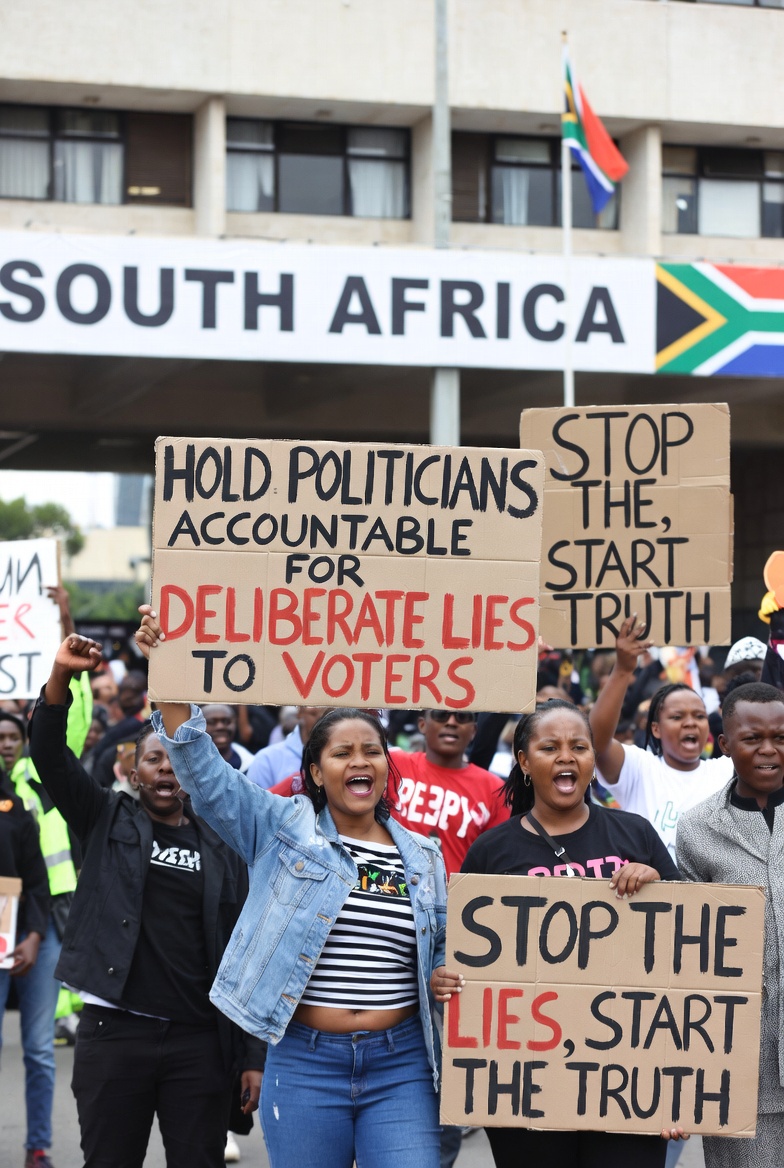
Table of Contents
ToggleDemocracy Without Consequence
South Africa prides itself on being one of the most constitutionally advanced democracies in the world. We vote regularly, transfer power peacefully, and maintain strong institutional frameworks.
But beneath this democratic architecture lies an uncomfortable truth: politicians can lie to voters during election campaigns with virtually no legal consequence.
Campaign promises are not binding. Misleading claims are rarely sanctioned. And once elected, representatives are insulated from the very voters whose trust secured their power.
If democracy is built on accountability, what happens when there is none?
A legislative development in Wales may offer both a warning and a roadmap.
The Welsh Government is advancing the Senedd Cymru (Member Accountability and Elections) Bill, a reform package aimed at strengthening democratic standards.
Among its provisions are:
- Mechanisms allowing voters to recall elected representatives
- Expanded powers to enforce codes of conduct
- Measures targeting false statements of fact made during election campaigns
Crucially, the focus is not on opinion or ideology, but on deliberate deception — statements that are verifiably false and intended to manipulate voters.
Standards committees in Wales have argued that knowingly misleading the electorate undermines democratic legitimacy itself. Elections, in this view, are not merely contests of persuasion but exercises in informed consent.
If consent is secured through deception, can it truly be democratic?
In South Africa, no equivalent legal framework exists.
While electoral laws regulate funding, advertising procedures, and administrative compliance, they do not meaningfully address truthfulness in political communication.
This creates several structural gaps:
- No legal penalty for deliberate lies
Politicians may make factually false claims without fear of prosecution or disqualification.
- Party discipline replaces voter power
Accountability is internal—managed by political parties rather than by democratic institutions.
- Voters lack corrective mechanisms
Once elected, representatives cannot be recalled by constituents.
The result is a system in which electoral dishonesty carries political risk but not legal consequences—and that risk is often temporary.
Documented Examples: Contested Factual Claims in South African Campaign Politics
To understand what electoral accountability for deception might look like in practice, it is useful to examine real South African campaign statements that were publicly disputed, fact-checked, or contradicted by official data.
These cases do not exist to assign legal guilt, but to illustrate the category of verifiable factual claims that accountability frameworks would need to evaluate.
John Steenhuisen — “R1 Billion Flag” Cost Claim
DA leader John Steenhuisen repeatedly criticised the proposed national flag project in Pretoria, calling it a “R1 billion flag.”
Government clarifications later indicated that:
- The R1 billion estimate referred to a broader heritage precinct development, not solely the flag structure.
- The flag itself constituted only one component of projected expenditure.
Critics argued that presenting the entire precinct cost as the price of a single flag risked misleading voters about public spending priorities.
Reference anchors:
Africa Check — Government flag cost fact-check.
Department of Sport, Arts and Culture project briefings
3️⃣ ANC Campaign Messaging on Job Creation
Across multiple election cycles, ANC campaign messaging has included claims that government programmes had “created millions of jobs.”
While job creation initiatives have existed, labour market data from Statistics South Africa has shown that:
- Employment levels fluctuate due to macroeconomic conditions.
- Net job gains cannot always be directly attributed to government policy.
- In certain periods, unemployment rose despite such claims.
Economists and fact-checkers have therefore cautioned against presenting aggregate employment shifts as unilateral achievements of the governing party.
Reference anchors:
Stats SA — Quarterly Labour Force Survey (QLFS)
Africa Check — Job creation attribution analyses.
Why This Matters: Trust Is Democracy’s Currency
Democracy does not function on voting alone. It depends on trust:
- Trust that information presented to voters is accurate
- Trust that promises are made in good faith
- Trust that representatives act honestly
When this trust erodes:
- Voter turnout declines
- Cynicism increases
- Extremism gains ground
- Institutional legitimacy weakens
In such an environment, elections continue — but belief in their meaning fades.
A democracy without trust becomes procedural rather than participatory.
Could South Africa Adopt a Similar Law?
Adapting a Welsh-style framework would require careful constitutional and legal design. The goal would not be to police speech broadly, but to target a narrow category: deliberate, verifiable deception intended to influence electoral outcomes.
A potential framework could include:
- Narrow Legal Scope
Applicable only to:
- Election periods
- Candidates and office-holders
- Statements of fact (not opinion)
- Claims proven knowingly false
This protects political debate while deterring intentional misinformation.
- Graduated Sanctions
Rather than immediate criminalisation, penalties could escalate:
- Mandatory public corrections
- Fines
- Campaign sanctions
- Disqualification in severe cases
- Recall triggers for sitting representatives
The aim is deterrence and democratic protection — not speech suppression.
- Independent Oversight
Enforcement must sit with an impartial body, such as:
- An expanded electoral commission mandate
- A dedicated electoral integrity tribunal
- Judicial review pathways
Political neutrality would be essential to prevent weaponisation.
Constitutional Considerations
South Africa’s Constitution strongly protects freedom of expression — including political speech.
However, rights are not absolute.
Limitations are constitutionally permissible when they are:
- Reasonable
- Proportionate
- In service of a legitimate democratic objective
Protecting voters from deliberate deception could meet this threshold — particularly if the law is narrowly tailored.
The Constitution protects the right to speak, but it does not guarantee a right to mislead voters with impunity.
The Recall Dimension: Power Back to Voters
One of the most transformative elements of the Welsh reform is the recall mechanism.
Recall allows voters to remove elected officials mid-term under defined conditions, such as:
- Ethical breaches
- Misconduct findings
- Serious violations of public trust
South Africa currently offers no such tool.
Introducing recall — even in limited form — would rebalance power between representatives and constituents.
It would signal that electoral mandates are conditional rather than absolute.
Risks and Criticisms
Any proposal to regulate political truth raises legitimate concerns:
Free speech risks
Who decides what is “false”?
Politicised enforcement
Could ruling parties weaponise complaints?
Legal complexity
Proving intent and deception is difficult.
These risks are real — but not insurmountable.
High evidentiary thresholds, independent oversight, and judicial review can mitigate abuse.
The Welsh debate itself reflects these tensions — proof that democratic systems can wrestle with accountability without abandoning liberty.
A Democratic Maturity Test
The question facing South Africa is not simply legal — it is philosophical:
Do we believe democracy requires truthfulness?
If the answer is yes, then accountability mechanisms must follow.
If the answer is no, then we must accept elections as rhetorical exercises rather than instruments of public will.
Wales’ reform effort does not provide a perfect model, but it does something equally valuable:
It proves that democratic systems can evolve.
Conclusion: From Voting to Governing
South Africa’s democratic framework remains robust in form, but accountability gaps weaken it in practice.
Holding politicians legally accountable for deliberate deception would not silence political debate. It would strengthen it by ensuring that voters engage with reality rather than fabrication.
Democracy is not only the right to choose leaders.
It is the right to choose them based on truth.
As Wales explores this frontier, South Africa should at least begin the conversation.
Read next Zimbabwe’s Economy Improved. The Data Changed. The ZEP Just Kept Getting Extended
About The Author

Lungi Nkosi
Hi, I’m Lungi, the writer and researcher behind Political Nexus. I started this blog because I believe politics and history aren’t just distant, academic subjects — they shape how we live, how we understand the world, and how we imagine the future.
I’m not here to lecture; I’m here to ask questions, share insights, and spark conversations. Whether it’s unpacking a breaking news story, looking back at a key moment in history, or analyzing the choices of today’s leaders, I aim to keep things clear, thoughtful, and engaging.
My interest in politics and history comes from a lifelong curiosity about power — who holds it, how it’s used, and how ordinary people are affected by it. Over the years, I’ve seen how narratives are built, how facts are bent to fit agendas, and how history is used as both a weapon and a guide. That’s why Political Nexus is more than a blog — it’s a space for reflection, inquiry, and conversation.
I write about:
Politics: current events, government decisions, and global trends that affect South Africa and beyond.
History: how past events continue to echo in today’s politics and society.
Media & Narratives: questioning how stories are told, what gets left out, and why.
When I’m not writing, you can usually find me [behind the computer creating stories to tell, exploring books on history and philosophy, debating ideas over coffee with friends, or experimenting with new projects.
At the heart of it, I see myself as a storyteller — one who isn’t afraid to challenge easy answers, ask uncomfortable questions, and look deeper than the surface. My hope is that readers like you walk away from each article not just more informed, but more curious.
So, welcome to Political Nexus. Let’s explore, question, and learn together.
 A Weak Rand, Strong State, Weakened Citizens
  Women for Change, or women against nature?
  Rights Without Capacity: Is South Africa Building an Illusion of Delivery?
  Who Funds Court Rulings?
  Media, Rulings & Policy Flow: How Courts Quietly Shape South African Governance
  Framing the Nation: How Media Narratives Shape Political Reality in South Africa