Did The Media Lie About Elvis Nyathi?

Three years ago, on the 7th of April 2022, South Africa was horrified to hear that a group of South African men had killed and set alight a Diepsloot man during what was called xenophobic attacks. The South African media outlets such as Daily Maverick, News24, and NewzRoom Afrika extensively covered this story.
Tensions between South Africans and foreigners have existed since the xenophobic attacks in 2008. Seven men were arrested for the murder of Elvis Nyathi, later identified as Mbodazwe Banajo. This raises critical questions: Why was he using a different name, and can we be sure about his background and relationships? Why did the media gloss over this detail? These uncertainties prompt a closer look at the facts surrounding his case.
The men arrested were released on bail. The case against the men stalled when Mbodazwe’s widow (Nomsa Tshuma) refused to identify the suspects involved in her husband’s murder. Why did his widow refuse to testify? Was it fear of reprisal, distrust in the system, or was there something more complicated about his life? Was she lying? The media glossed over this, but this was a crucial piece of the puzzle since she was the sole witness to his murder. The media didn’t bother investigating her more deeply. The media reported on this story without consideration for the impact it would have on the accused and their families
The absence of crucial evidence—such as crime scene photos and mortuary reports—raises a central issue: On what basis did the media assert the details of Mbodazwe Banajo’s death? Does this suggest the story was constructed around a xenophobia narrative without reliable verification? The absence of crucial evidence is unusual for such a high-profile case.
Did Elvis Nyathi ever exist?
With the absence of crucial evidence such as a mortuary report, crime scene pictures how did the media verify their story? How did the media assert that Mbodazwe ever existed in the first place?
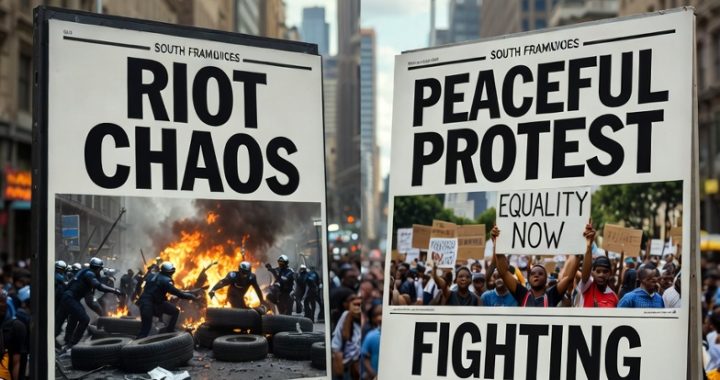
South African media often leans on the pre-existing narrative of xenophobia. This framing offers a straightforward storyline that resonates with the public but risks oversimplifying the events. In the case of Elvis Nyathi—later identified as Mbodazwe Banajo—the narrative of a xenophobic mob killing a foreign national was accepted almost immediately. Yet, the absence of forensic evidence, the widow’s silence, and even questions about the victim’s identity suggest a more complex reality. By anchoring the story in xenophobia, journalists may have unintentionally closed off deeper lines of inquiry.
South African media often defaults to the xenophobia narrative—a familiar, emotionally charged frame. Take the 2008 riots, where tragic deaths were quickly shaped into xenophobic scapegoating, sidelining deeper analysis,
More recently, Operation Dudula has been depicted as anti-migrant vigilantism—but online commentary and expert criticism reveal the underlying socio-economic frustrations and misinformation at play. This pattern shows how media, in seeking clarity and clicks, may privilege narrative over verification.
In 2015, the gruesome images of Emmanuel Sithole’s killing drove the story, but the framing left little space for nuance. Emmanuel Sithole could have been killed for any number of reasons but, the media labelled the killing a xenophobic attack. when a foreign national is killed by a south African it is xenophobia but, when a south African is killed by a foreign national it is labelled crime. Is that fair? Ultimately, the central concern is whether the media acted responsibly in reporting Mbodazwe Banajo’s death without verifiable evidence, and whether this contributed to a potentially misleading narrative.
About The Author

 Rights Without Capacity: Is South Africa Building an Illusion of Delivery?
  Who Funds Court Rulings?
  Media, Rulings & Policy Flow: How Courts Quietly Shape South African Governance
  Framing the Nation: How Media Narratives Shape Political Reality in South Africa
  Governing by Court Order: The Rise of Juristocracy in South Africa
  The Quiet Phasing Out of Childcare Institutions