A Weak Rand, Strong State, Weakened Citizens
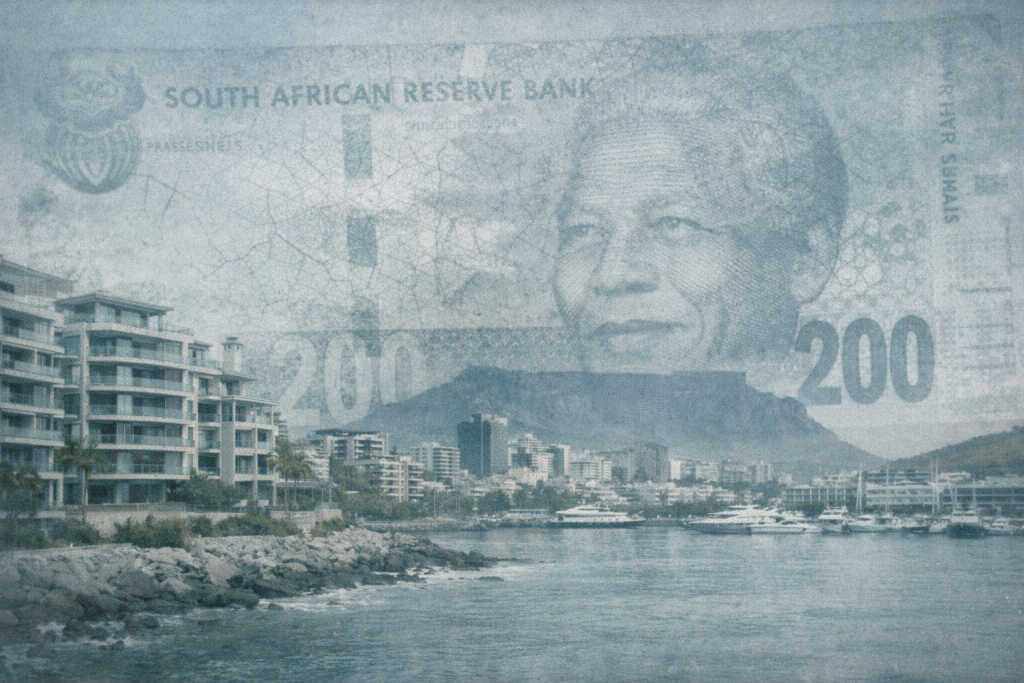
Table of Contents
ToggleHow a Weak Rand Became Acceptable
The Constitution mandates the South African Reserve Bank (SARB) to protect the value of the rand in pursuit of price stability and sustainable economic growth, independently of government interference and without fear, favour, or prejudice.
This means that the Governor of the Reserve Bank is constitutionally mandated to protect the rand.
The rand has experienced a sustained decline over many years. Some of this weakness is driven by global market dynamics and domestic political risk. In recent years, however, the rand has also been subject to repeated episodes of speculative pressure and market manipulation, both locally and offshore.
What remains unclear is how the Governor intends to protect the rand from these pressures — and whether the constitutional mandate is being fulfilled in practice.
In reality, SARB, like many modern central banks, has interpreted “protecting the value of the currency” narrowly. In practice, this has meant:
Targeting domestic inflation
Declining to defend the rand’s external purchasing power
Treating exchange rate weakness as acceptable collateral damage
This interpretation does not appear explicitly in the Constitution. It is a policy choice layered on top of it.
As a result, SARB has largely confined its role to managing inflation through interest rate adjustments, while allowing the external value of the rand to erode over time. Protecting the rand’s purchasing power — especially for citizens — has not been treated as a priority.
A persistently weak rand places South African citizens at a structural disadvantage. This is visible in cities such as Cape Town, where individuals earning in stronger currencies are able to outcompete locals for housing, assets, and business opportunities. Citizens paid in rands are priced out — not because of lack of productivity, but because of currency asymmetry.
This raises a fundamental question: what is the point of a national currency if it systematically disadvantages its own citizens?
At its most basic level, a currency should:
Preserve purchasing power over time
Allow citizens to save, plan, and invest
Enable participation in the domestic economy
Act as a neutral medium, not a barrier
When a currency advantages external earners, foreign capital, and hard-currency asset holders while disadvantaging domestic earners, it ceases to function as a public utility. It becomes a sorting mechanism.
In practice, the rand now functions as:
A shock absorber for political risk
A release valve for global capital flows
A disciplining mechanism for labour
A discount for foreign entry
But not as:
A store of value for ordinary citizens
A tool for upward mobility
A protection against economic displacement
From the citizen’s point of view, this is a failure.
Within the SARB framework, success is defined by inflation remaining within target ranges, functioning financial markets, continued access to global capital, and institutional credibility. None of these outcomes require the rand to preserve external purchasing power or protect citizens from global arbitrage.
As a result, the system can declare success while citizens experience decline.
If protecting the value of the currency is reduced to CPI management, if external purchasing power is allowed to erode indefinitely, and if the rand facilitates displacement rather than participation, then the constitutional purpose of the currency is not being met for citizens.
A currency that works for markets but not for its people has failed in its most basic civic function.
About The Author

Lungi Nkosi
Hi, I’m Lungi, the writer and researcher behind Political Nexus. I started this blog because I believe politics and history aren’t just distant, academic subjects — they shape how we live, how we understand the world, and how we imagine the future.
I’m not here to lecture; I’m here to ask questions, share insights, and spark conversations. Whether it’s unpacking a breaking news story, looking back at a key moment in history, or analyzing the choices of today’s leaders, I aim to keep things clear, thoughtful, and engaging.
My interest in politics and history comes from a lifelong curiosity about power — who holds it, how it’s used, and how ordinary people are affected by it. Over the years, I’ve seen how narratives are built, how facts are bent to fit agendas, and how history is used as both a weapon and a guide. That’s why Political Nexus is more than a blog — it’s a space for reflection, inquiry, and conversation.
I write about:
Politics: current events, government decisions, and global trends that affect South Africa and beyond.
History: how past events continue to echo in today’s politics and society.
Media & Narratives: questioning how stories are told, what gets left out, and why.
When I’m not writing, you can usually find me [behind the computer creating stories to tell, exploring books on history and philosophy, debating ideas over coffee with friends, or experimenting with new projects.
At the heart of it, I see myself as a storyteller — one who isn’t afraid to challenge easy answers, ask uncomfortable questions, and look deeper than the surface. My hope is that readers like you walk away from each article not just more informed, but more curious.
So, welcome to Political Nexus. Let’s explore, question, and learn together.
 Should South Africa Criminalise Political Lies? Lessons From Wales’s Democratic Reform
  Women for Change, or women against nature?
  Rights Without Capacity: Is South Africa Building an Illusion of Delivery?
  Who Funds Court Rulings?
  Media, Rulings & Policy Flow: How Courts Quietly Shape South African Governance
  Framing the Nation: How Media Narratives Shape Political Reality in South Africa