South Africa’s Energy Tug-of-War: Are Foreign-Funded NGOs Keeping the Lights Off?
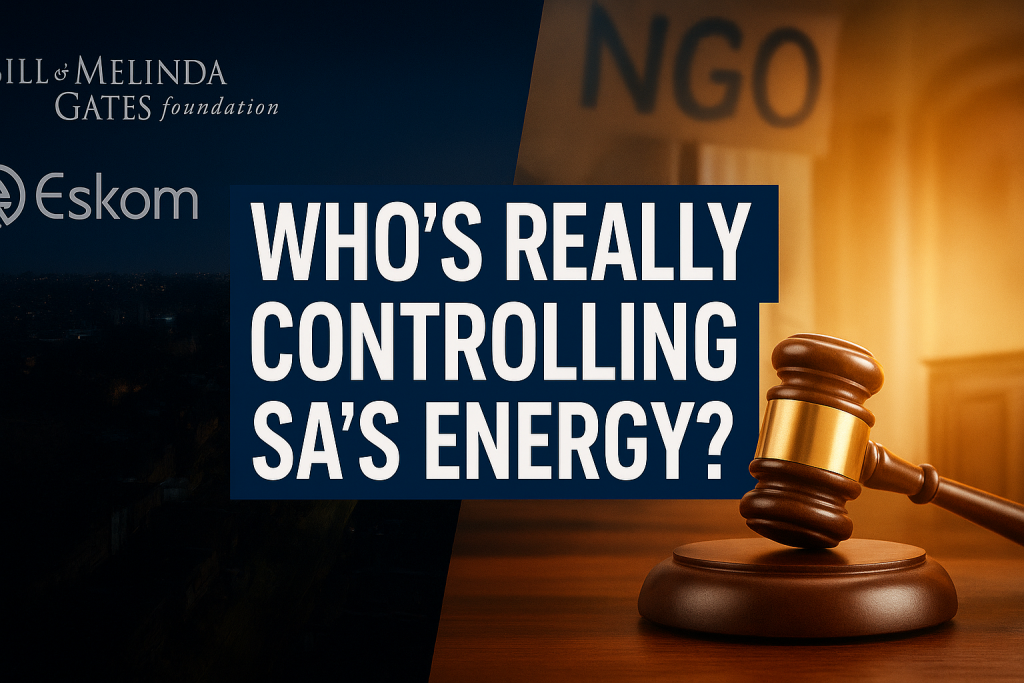
On September 17, 2025, the Supreme Court of Appeal in South Africa annulled the environmental authorization for Eskom’s proposed 3,000 MW gas-fired power plant in Richards Bay. The ruling cited inadequate public consultation during the approval process by the Department of Forestry, Fisheries, and the Environment.
A few environmental groups, such as the South Durban Community Environmental Alliance (SDCEA) and Groundwork, instituted the case against Eskom, citing issues with public participation, the failure to properly assess renewable energy alternatives, and inadequate consideration of fugitive emissions.
This case follows another case instituted by the Southern African Faith Communities’ Environment Institute (SAFCEI) against Eskom in 2017. In that case, the court reached a similar verdict, setting aside the government’s nuclear procurement deals (involving Russia, the US, and South Korea) because they were struck without proper debate in Parliament and adequate environmental and financial impact assessment.
South Africa has been facing an energy crisis for almost two decades. Load shedding, a system where Eskom cuts power all across the country at different time intervals, was implemented to ease the burden on the power grid, but this has devastated South Africa’s economy and businesses. Organizations such as the United Nations have been pressing nations to use alternative energy sources to coal, stating that coal emits poisonous gases that are harmful to the environment and public health.
A quick perusal of SAFCEI’s website reveals that the aim is to prevent the government from using nuclear energy as an alternative to coal altogether and instead force it to use renewable energy, such as solar and wind energy. They further believe that atomic energy is outdated, costly, and has lengthy build times. They argue that nuclear energy accidents could harm the environment and communities.
At the heart of the legal debates surrounding South Africa’s energy future lies an intriguing question regarding influence. Government officials, including Minister Gwede Mantashe, express concerns that powerful foreign funders may influence certain NGOs, potentially obstructing vital oil and gas projects. Many of these organizations benefit from grants from renowned philanthropic entities like the Bill and Melinda Gates Foundation, prompting essential discussions about the fine line between advocacy and influence.
Meanwhile, the country still grapples with ongoing power cuts, a fragile grid, and a declining economy dependent on reliable energy sources. For ordinary citizens, the annulment of another major energy project feels less like environmental justice and more like déjà vu — another chapter in a story where NGOs steer government decisions.
Background
Eskom’s gas plant permit at Richards Bay is not the first energy project that the courts halted. In 2017, the Western Cape High Court declared the government’s multibillion-rand nuclear energy procurement deal with Russia, the United States, and South Korea unlawful.
The verdicts centre on the government’s inability to follow due process and proper environmental and public consultations. While the legal grounds appear similar, the political climate differs dramatically.
In 2017, the project was painted as a symbol of President Jacob Zuma’s corruption. The media painted the project as another one of Zuma’s corruption scandals and a sure way to bankrupt the country. The decision to halt the project was celebrated and seen as a victory for South Africa.
Fast-forward to 2025, and the court’s decision is met with skepticism and confusion. The Richards Bay gas project was meant to meet South Africa’s immediate energy demands, just as the 2017 nuclear energy project was. The intention was to provide an alternative source of energy that is cleaner than coal but more reliable than solar energy. However, there are counterarguments that the country would be depending on fossil fuels at a time when the world is relying on renewable energy.
Citizens are asking whether environmental groups are truly working in the best interest of communities and the environment or if they have a hidden agenda. A similar question can be posed to the judicial system: Is the South African judicial system acting in the best interest of the environment, or is it prolonging SA’s energy crisis?
The Role and Influence of NGOs and Foreign Funders
The growing influence of NGOs in South Africa is hard to ignore. Whether it is a debate about energy or migrants, their impact is felt. A complex web of funding behind organizations such as Ground Works, South Durban Community Environmental Alliance, and others goes unquestioned.
Several of these NGOs receive financial support from global philanthropic institutions — including the Open Society Foundation, the European Climate Foundation, and the Bill and Melinda Gates Foundation — all of which promote global decarbonization agendas.
Energy Minister Gwede Mantashe has accused some organizations of acting as proxies for foreign interests. “These are not grassroots activists,” Mantashe once argued. “They are foreign-funded agents standing in the way of African development.” While his claim may sound politically convenient, it taps into a genuine concern: to what extent is South Africa’s energy sovereignty being shaped by external agendas disguised as environmental advocacy?
The point is not to question climate change’s legitimacy but whether South Africa’s path toward clean energy must always come at the expense of development and industrialization.
Western countries now fund anti-fossil fuel activism, which once relied on the same resources to build their economies. Their shift to renewables came after decades of fossil-driven prosperity. For developing nations like South Africa, the insistence on skipping directly to renewables — without transitional energy — feels less like environmental justice and more like economic restraint.
In this light, the annulment of the gas permit may not just represent a legal victory. It could also signify a quiet win for a global movement that values environmental symbolism over the complex realities of African growth.
The Cost of Stagnation: Energy Shortages and Economic Fallout
Court victories of these litigations may feel like a safeguard for democracy and accountability, but the effects are felt far from the courtroom. They are felt in classrooms, factories, and homes plunged into darkness. Loadshedding costs the country billions in productivity and investment. Unemployment continues to soar, and industries that rely on consistent electricity, such as mining and manufacturing, are scaling back operations.
The annulment of another major energy project sends a message to potential investors: South Africa’s regulatory environment is unpredictable and vulnerable to activist pressure.
Transition to renewable energy cannot be achieved overnight. Without a stable bridge — such as gas — to sustain the grid while renewable infrastructure matures, the country risks deepening its dependence on coal or collapsing its already fragile energy supply altogether.
Meanwhile, ordinary South Africans are caught in the middle of a philosophical war over what kind of energy future the country should pursue — one defined by global environmental ideals or one rooted in local realities. Each court delay may represent a procedural victory, but it also extends the country’s descent into energy insecurity, unemployment, and economic stagnation.
Sovereignty and Sustainability
There is no denying the role of environmental justice and responsible governance, but activism cannot serve the interests of foreign donors more than the realities of South Africans. The very institutions that claim to protect citizens become conduits for agendas that might not be in the best interest of citizens.
South Africa’s energy transition must be shaped by its own people. A just transition means ensuring that environmental protection does not come at the cost of national sovereignty, industrial decline, or perpetual darkness.
Until that balance is struck, the courts may continue to rule, the NGOs may continue campaigning, and ordinary South Africans will continue to ask the same question: when will the lights finally stay on?
Table of Contents
ToggleAbout The Author

Lungi Nkosi
Hi, I’m Lungi, the writer and researcher behind Political Nexus. I started this blog because I believe politics and history aren’t just distant, academic subjects — they shape how we live, how we understand the world, and how we imagine the future.
I’m not here to lecture; I’m here to ask questions, share insights, and spark conversations. Whether it’s unpacking a breaking news story, looking back at a key moment in history, or analyzing the choices of today’s leaders, I aim to keep things clear, thoughtful, and engaging.
My interest in politics and history comes from a lifelong curiosity about power — who holds it, how it’s used, and how ordinary people are affected by it. Over the years, I’ve seen how narratives are built, how facts are bent to fit agendas, and how history is used as both a weapon and a guide. That’s why Political Nexus is more than a blog — it’s a space for reflection, inquiry, and conversation.
I write about:
Politics: current events, government decisions, and global trends that affect South Africa and beyond.
History: how past events continue to echo in today’s politics and society.
Media & Narratives: questioning how stories are told, what gets left out, and why.
When I’m not writing, you can usually find me [behind the computer creating stories to tell, exploring books on history and philosophy, debating ideas over coffee with friends, or experimenting with new projects.
At the heart of it, I see myself as a storyteller — one who isn’t afraid to challenge easy answers, ask uncomfortable questions, and look deeper than the surface. My hope is that readers like you walk away from each article not just more informed, but more curious.
So, welcome to Political Nexus. Let’s explore, question, and learn together.
 Rights Without Capacity: Is South Africa Building an Illusion of Delivery?
  Who Funds Court Rulings?
  Media, Rulings & Policy Flow: How Courts Quietly Shape South African Governance
  Framing the Nation: How Media Narratives Shape Political Reality in South Africa
  Governing by Court Order: The Rise of Juristocracy in South Africa
  The Quiet Phasing Out of Childcare Institutions
  If State Power Built Afrikaner Prosperity, Why Isn’t It Working for Black South Africans?