Part 2.1: The Rand Rigging Saga
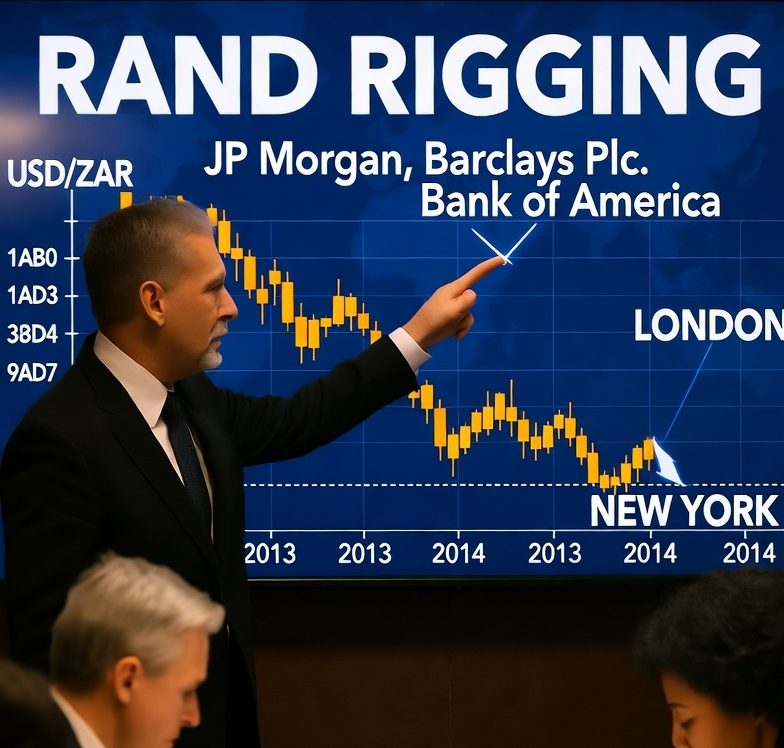
Table of Contents
ToggleThe 28-bank rand conspiracy and the 2025 Constitutional Court showdown
South Africa’s FX scandals centre on the USD/ZAR “Rand Rigging” Case, a local offshoot of the global Forex Cartel. Launched in 2015, it accuses banks of colluding to manipulate the dollar-rand exchange rate between 2007 and 2013, distorting import prices, exports, and consumer costs in an import-dependent economy. The case involves 28 banks (local and international) and has dragged on for a decade, with settlements, appeals, and a pivotal 2025 Constitutional Court hearing. It’s emblematic of how global FX collusion hit emerging markets hardest.
- Traders allegedly shared confidential info via chatrooms to fix bids/offers, spreads, and spot rates at the London 4 p.m. FIX.
- Practices included market division (alternating trades), price-fixing, and coordinating to disadvantage clients—mirroring the global scandal but tailored to USD/ZAR volatility.
- Impact: Weakened rand made imports costlier, fueling inflation and hurting South African households; estimated economic damage runs into billions of rands.
Involved Banks and Status
Initially, 28 banks; statuses as of August 2025 (post-CAC ruling):
Category | Banks Involved | Notes |
Leniency Granted | Barclays Plc, Barclays Capital, Absa Bank Ltd | Immunity for cooperation. |
Settled with Admission & Fines | Citibank N.A., Standard Chartered Bank | Citibank: Undisclosed fine (2023); Standard Chartered: R42.7M (~$2.3M) administrative penalty (Nov 2023) for USD/ZAR manipulation. |
Case Dropped | Nedbank Group, FirstRand Ltd, Credit Suisse Group, Bank of America N.A. | Cleared by CAC. |
Appeals Upheld (Cleared) | Bank of America Merrill Lynch, JP Morgan Chase (Australia), ANZ, Standard Bank of SA, Nomura, Commerzbank, Macquarie, HSBC USA, Merrill Lynch, Bank of America NA, Nedbank Ltd, FirstRand Bank Ltd, Standard Americas Inc. (13 total) | CAC ruled that the Commission’s case was “vague” and was pending before the Constitutional Court. |
Still Implicated (No Appeal) | Investec Ltd, Investec Bank Ltd | Subject to ongoing proceedings. |
Appeals Not Upheld | BNP Paribas, JP Morgan Chase Bank, Credit Suisse Securities, HSBC Bank Plc | Only four remaining post-CAC; Commission seeks reinstatement of all. |
Local banks (e.g., Standard Bank, Nedbank, FirstRand) deny collusion, citing reputational harm.
Timeline
- 2007-2013: Alleged collusion period, overlapping global Forex Cartel.
- 2015: Competition Commission raids banks and launches probe, recommending 10% revenue fines.
- 2017: Barclays Africa (Absa) granted leniency.
- 2023: Tribunal advances case; Standard Chartered settles for R42.7M, admitting liability—first major admission. Citibank settles separately.
- 2024: The Competition Appeal Court (CAC) upholds most banks’ appeals, slamming the Commission’s evidence as “contradictory” and lacking jurisdiction over foreign “peregrini” (non-resident) banks. Only four banks remain.
- August 19-22, 2025: The Constitutional Court hears the Commission’s appeal to overturn CAC, arguing jurisdiction via a “single overarching conspiracy” (SOC) with effects in SA (e.g., distorted prices). Advocate Tembeka Ngcukaitobi represents the Commission; banks seek dismissal.
- Economic: Manipulation exacerbated rand volatility (e.g., 2017 trades like Phillips’ case), costing exporters and inflating consumer prices. A 2023 parliamentary report highlighted regulatory gaps in FX oversight.
- Regulatory: Strengthens calls for stricter enforcement; a Commission victory could expand jurisdiction over global players, aligning SA with BRICS peers.
- Broader Ties to Global Scandals: Many accused banks (e.g., JPMorgan, HSBC) faced global fines; Phillips’ 2023 conviction (raised in SA, targeting USD/ZAR) underscores U.S. extraterritorial reach into SA markets.
South Africa’s rigging scandal demonstrates how major financial institutions can influence developing countries’ economies without a physical presence.
Mechanisms of Influence
- Currency Market Manipulation:
- Mechanism: Large banks (e.g., JPMorgan, Citibank) dominate the $7.5 trillion daily FX market. Trading high volumes of a developing country’s currency (e.g., USD/ZAR) can influence exchange rates, as seen in the 2013-2015 Forex Scandal and the 2017 USD/ZAR manipulation by Neil Phillips (Glen Point Capital). A weaker currency raises import costs, fueling inflation and affecting purchasing power.
- Impact on Developing Countries: Emerging markets like South Africa, with less liquid currencies, are vulnerable to volatility from large trades executed remotely via global trading desks (e.g., London, New York). No physical presence is needed—trades are electronic.
- Example: Phillips manipulated USD/ZAR rates in 2017 from abroad, triggering a payout of $20M in options by exploiting low-volume trading periods. This impacted South African prices without setting foot there.
- Capital Flows and Investment:
- Mechanism: Institutions control capital allocation through bonds, equities, or loan investments. Hedge funds, investment banks, or asset managers (e.g., BlackRock) can remotely shift billions in or out of a country’s markets, affecting stock indices, bond yields, or currency stability.
- Impact: Developing countries reliant on foreign investment (e.g., Kenya, Nigeria) face economic shocks when capital exits suddenly, as seen in the 2013 “Taper Tantrum” when the U.S. Federal Reserve signals triggered outflows from emerging markets. No local presence is required—decisions are made in global financial hubs.
- South Africa Context: Foreign investors hold ~30% of South Africa’s government bonds (2025 data). A coordinated sell-off from abroad could spike yields, raising borrowing costs and straining the economy.
- Debt and Lending Practices:
- Mechanism: International banks and institutions like the IMF or World Bank issue loans or bonds in foreign currencies (e.g., USD). Developing countries servicing dollar-denominated debt face pressure if their currency weakens, as repayments become costlier.
- Impact: This can force austerity or policy concessions without physical intervention. For example, Zambia’s 2020 default on Eurobonds was exacerbated by global creditors’ terms, managed remotely.
- South Africa: The country’s $30B external debt (2025) exposes it to global lenders’ influence, who can dictate terms from abroad.
- Speculative Trading and Derivatives:
- Mechanism: Institutions use derivatives (e.g., futures, options) to bet on a country’s assets or currency. High-volume speculative trades can destabilize markets, as seen in the 1997 Asian Financial Crisis, when hedge funds remotely shorted currencies like the Thai baht.
- Impact: Developing countries with open capital markets face volatility from such trades, amplifying economic instability without direct intervention.
- South Africa Link: The USD/ZAR case showed banks allegedly rigging rates via derivatives, affecting South African trade and inflation from global trading floors.
- Market Sentiment and Credit Ratings:
- Mechanism: Global banks and rating agencies (e.g., Moody’s, S&P) shape perceptions of a country’s economic health through reports or ratings from abroad. A downgrade can raise borrowing costs or deter investment.
- Impact: Developing countries like South Africa, downgraded to junk status by 2020, face higher interest rates and reduced FDI, driven by decisions in New York or London.
- Example: In 2023, S&P’s outlook revision on South Africa’s debt sparked rand volatility, all without physical presence.
- Vulnerability: South Africa’s open capital account and reliance on foreign investment (~40% of JSE market cap) make it susceptible to remote influence. The USD/ZAR case (2007-2013) showed banks like Barclays and Citibank allegedly rigging rates from abroad, costing billions in economic distortions.
- Countermeasures: The SARB’s interventions and the Competition Commission’s pursuit of 28 banks (with settlements like Standard Chartered’s R42.7M in 2023) show resistance. A favorable 2025 Constitutional Court ruling could deter future manipulation.
26½ hours from this very minute, the Constitutional Court gavel falls in Bloemfontein. Part 3 launches tomorrow 18:00 sharp: “1997 Asian Crash → BRICS Rebellion: How 5 Countries Are Burning the Strings”
Set your phone alarm for 17:55. Comment “BURN THE STRINGS” below and I’ll reply to every single one the second the post goes live. The rand’s final fight starts tomorrow at six. See you on the other side of the fire.
🔥 TOMORROW 18:00 🔥
PART 3: 1997 Crash → BRICS Rebellion
SUBSCRIBE + BELL · Comment “BURN THE STRINGS”
The rand’s final fight starts in 24 hours.
About The Author

Lungi Nkosi
Hi, I’m Lungi, the writer and researcher behind Political Nexus. I started this blog because I believe politics and history aren’t just distant, academic subjects — they shape how we live, how we understand the world, and how we imagine the future.
I’m not here to lecture; I’m here to ask questions, share insights, and spark conversations. Whether it’s unpacking a breaking news story, looking back at a key moment in history, or analyzing the choices of today’s leaders, I aim to keep things clear, thoughtful, and engaging.
My interest in politics and history comes from a lifelong curiosity about power — who holds it, how it’s used, and how ordinary people are affected by it. Over the years, I’ve seen how narratives are built, how facts are bent to fit agendas, and how history is used as both a weapon and a guide. That’s why Political Nexus is more than a blog — it’s a space for reflection, inquiry, and conversation.
I write about:
Politics: current events, government decisions, and global trends that affect South Africa and beyond.
History: how past events continue to echo in today’s politics and society.
Media & Narratives: questioning how stories are told, what gets left out, and why.
When I’m not writing, you can usually find me [behind the computer creating stories to tell, exploring books on history and philosophy, debating ideas over coffee with friends, or experimenting with new projects.
At the heart of it, I see myself as a storyteller — one who isn’t afraid to challenge easy answers, ask uncomfortable questions, and look deeper than the surface. My hope is that readers like you walk away from each article not just more informed, but more curious.
So, welcome to Political Nexus. Let’s explore, question, and learn together.
 From Soros to Sanctions: The 4 Levers That Rig Emerging Markets – BRICS’ 3 Fixes + 1 Fatal Flaw
  Part 2: London Typed 3 Words → Your Bread Jumped 15 %. The $10 Billion Forex Cartel
  Part 1: Why Banks Manipulate Currencies
  Rights Without Capacity: Is South Africa Building an Illusion of Delivery?
  Who Funds Court Rulings?
  Media, Rulings & Policy Flow: How Courts Quietly Shape South African Governance
 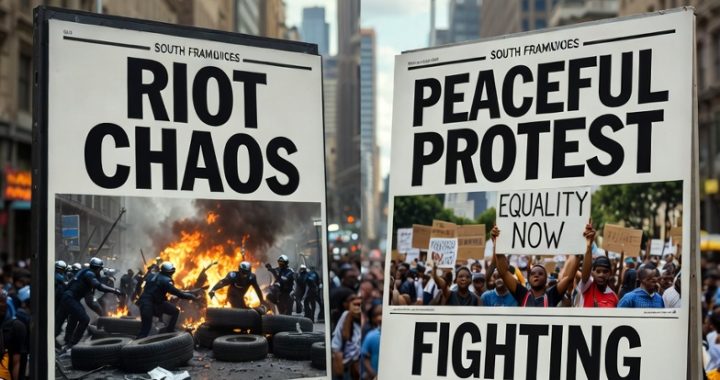 Framing the Nation: How Media Narratives Shape Political Reality in South Africa
1 thought on “Part 2.1: The Rand Rigging Saga”