The Madlanga Commission: Will South Africa Finally Confront Justice System Corruption?
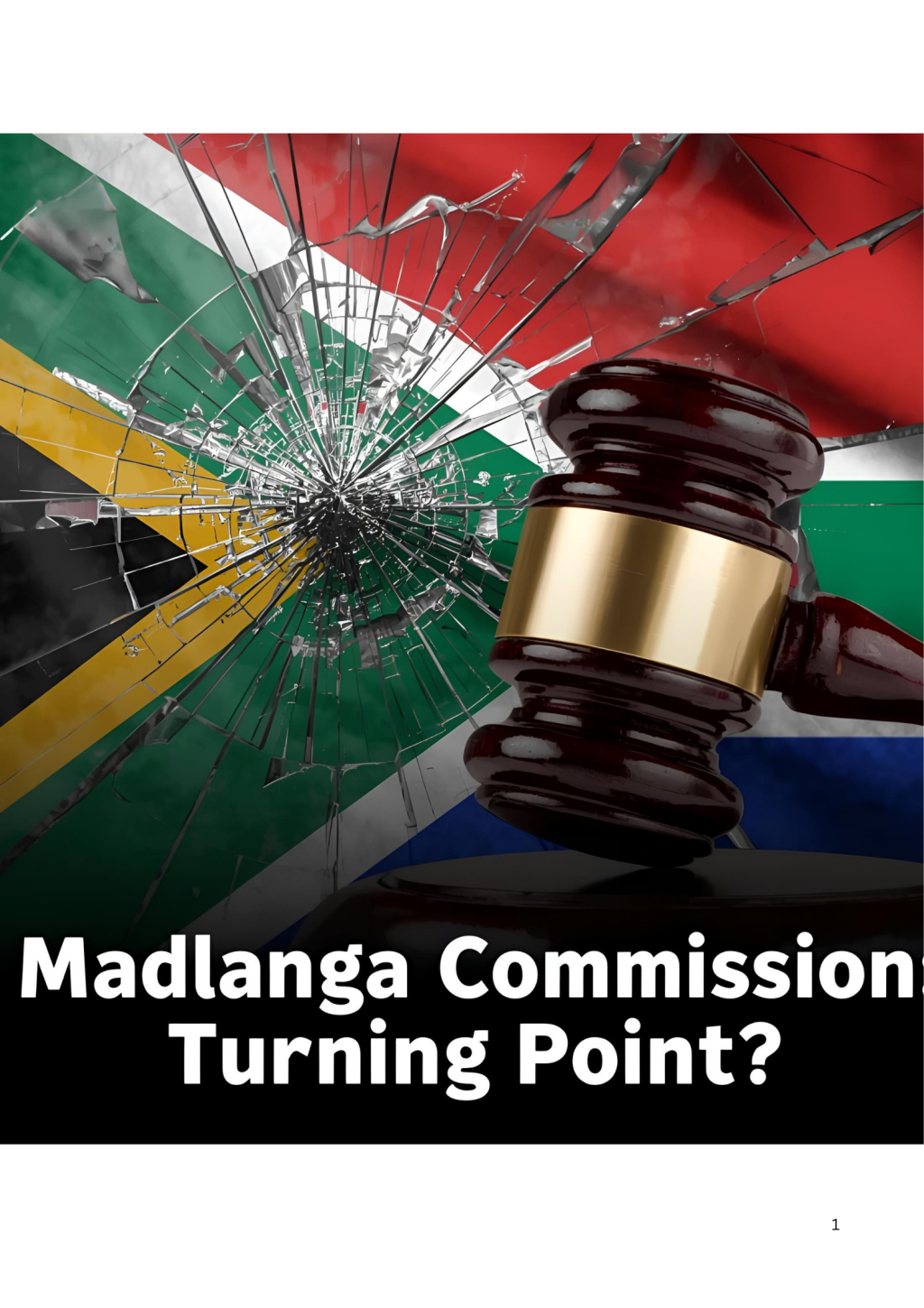
In July 2025, Mkhwanazi publicly claimed that judges and the broader judiciary had ties to criminal networks and drug cartels. He said these links were part of a larger corruption and interference scheme involving politicians, business people, law enforcement, intelligence, prosecutors, etc.
Mkhwanazi has alleged:
- Infiltration of Law Enforcement & Justice System by Criminal Syndicates
- Mkhwanazi claims that criminal syndicates, including drug cartels, have penetrated structures like SAPS (South African Police Service), metro police, correctional services, prosecutors, intelligence units, and other parts of law enforcement.
- He says politicians, businesspeople, and even judicial members are part of or protected by these corrupt networks.
- Political Interference in Investigations
- He alleges that high-ranking officials, including Police Minister Senzo Mchunu and Deputy National Police Commissioner Shadrack Sibiya, have interfered with investigations.
- Specifically, he claims that Minister Mchunu ordered the disbandment of the Political Killings Task Team in KwaZulu-Natal, a unit investigating politically-motivated killings.
- He also says over 121 case dockets under that task team were removed or redirected, disrupting the investigation of politically-motivated killings.
- Misuse / Weaponization of Intelligence & Classified Information
- Mkhwanazi accuses some politicians of improperly accessing crime intelligence or sensitive information or using it against investigations.
- There are claims of unauthorized access to intelligence, inappropriate disclosure of classified documents, and pressure on law enforcement or crime-intelligence leadership to drop or interfere with investigations.
- Alleged Collusion Between Judicial/Magistrate Figures and Criminal Actors
- He claims that some judicial officers have engaged in conduct that aids criminal networks. For example, a magistrate named Vusimuzi Mahlangu issued what Mkhwanazi describes as “very bizarre” bail conditions in a case involving the Crime Intelligence head, conditions that weren’t requested by the prosecution, but which had the effect of obstructing or slowing down investigations.
- More broadly, he’s accused the judiciary (in general) of being part of a system that protects or enables criminal illicit actors.
- Obstruction / Sabotage of Police Investigation Units
- Disbanding the Political Killings Task Team.
- Halting or delaying filling vacancies in the SAPS Crime Intelligence Unit, which is supposed to help in investigations.
- Remove crucial case files/dockets from units or transfer them out, which he claims undermines the ability to prosecute.
- Fear for Institutional Collapse if Nothing Changes
- Mkhwanazi says the criminal justice system is under serious threat — corruption, interference, and infiltration are pushing it toward collapse unless urgent reform and oversight are implemented.
The allegations by Mkhwanazi matter because they allude to an undermining of the police and justice system. They involve senior politicians tasked with keeping the country’s citizens safe. It matters because the citizens have the right to know and not be misled.
As testified by Nhlanhla Mkhwanazi, the Madlanga Commission is tasked with investigating corruption, interference in the justice system, and criminality.
Judge Madlanga is a constitutional court judge with a reputation for integrity, independence, and strong legal reasoning. He isn’t politically compromised, though his rulings and judgments appear left-leaning.
I question whether the judge will remain independent, as the commissioner accused the judiciary of corruption, stating that judges have ties to criminal networks. There is an obvious threat to self-interest and a self-review threat. Will the judge remain unbiased and not be tempted to defend the judiciary?
South Africa has had many inquiry commissions. Let’s take a look at them and their outcomes.
| Commission | Year(s) | Focus | Key Outcomes / Findings |
| Truth and Reconciliation Commission (TRC) | 1995–2002 | Apartheid-era human rights abuses | Documented gross violations, recommended reparations, granted amnesty to some; critics note limited prosecutions (Wilson 2001; Boraine 2000). |
| Seriti Commission (Arms Deal) | 2011–2016 | Strategic Defence Procurement corruption | Exonerated government actors, but later invalidated by the High Court for “manifest failure” (February 2018). |
| Marikana Commission (Farlam) | 2012–2015 | The killing of 34 miners by the police | Criticized SAPS, Lonmin, and unions; recommended reforms; prosecutions remain slow (Alexander 2013; Mnisi Weeks 2017). |
| Khayelitsha Commission | 2012–2014 | Police inefficiency in Khayelitsha | Recommended structural reforms in SAPS-community relations; some reforms implemented (O’Regan & Pikoli Report 2014). |
| Cassim Inquiry | 2015 | Fitness of NDPP (Mxolisi Nxasana) | The government found leadership instability and paid a large settlement (Africa 2016). |
| Heher Commission (Fees Commission) | 2016–2017 | Higher Education funding (Fees Must Fall) | Recommended no-fee tertiary system unaffordable; proposed ISFAP loan scheme (Habib 2019). |
| Nugent Commission | 2018 | Collapse of SARS under Tom Moyane | Found Moyane unfit, recommended overhaul; Moyane removed, Kieswetter appointed (Cameron 2019). |
| Zondo Commission (State Capture) | 2018–2022 | State capture and corruption | Six-part report; named 200+ individuals, billions to recover; prosecutions ongoing (Chipkin & Swilling 2018; Zondo Report 2022). |
| Madlanga Commission | 2024–present | Criminal justice corruption, political interference | Ongoing hearings; no final report yet (as of 2025). |
Criticism of commissions is that they are expensive and yield very few prosecutions. The Zondo commission cost a billion rand but saw very few prosecutions. The NPA stated they did not have the budget to investigate the accusations made at the commission any further. Therefore, everyone involved in the state capture did not face any consequences. How disrespectful was this to the citizens of this country? How dare one billion rand of the taxpayers’ money be spent on the commission, only for nothing to happen to the accused? It also makes one wonder whether there was any validity to the state capture claims. Were the state capture claims valid, or were they used to oust Zuma from the presidency?
I have little faith that the Madlanga commission will yield different results. At best, these commissions are purely entertainment for the masses. They give us something to talk about at family dinners.
About The Author

 Rights Without Capacity: Is South Africa Building an Illusion of Delivery?
  Who Funds Court Rulings?
  Media, Rulings & Policy Flow: How Courts Quietly Shape South African Governance
  Framing the Nation: How Media Narratives Shape Political Reality in South Africa
  Governing by Court Order: The Rise of Juristocracy in South Africa
  The Quiet Phasing Out of Childcare Institutions
1 thought on “The Madlanga Commission: Will South Africa Finally Confront Justice System Corruption?”