SADTU in the Elections: The Hidden Risk to Democratic Neutrality
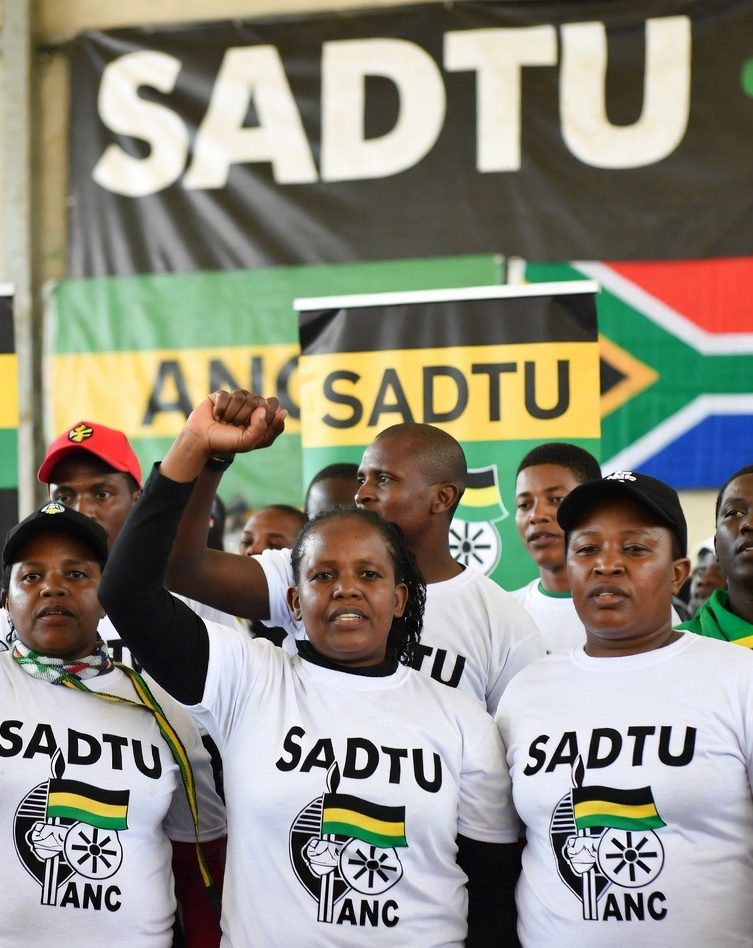
South Africa’s democratic project depends not only on the legality of its elections, but on public confidence in their neutrality. While the country’s electoral outcomes have generally been accepted as free and fair, an under-examined structural issue persists: the deep involvement of politically aligned organisations in election administration. The South African Democratic Teachers’ Union (SADTU) sits at the centre of this question.
This article does not allege electoral fraud nor question the ethics of individual teachers. Instead, it interrogates institutional design and perception. In a democracy, elections must be neutral in practice and in appearance. When political alignment and electoral administration overlap, even lawfully, public trust is put under strain.
Table of Contents
ToggleSADTU’s Political Origins
SADTU was launched on 6 October 1990, during a decisive moment in South Africa’s transition from apartheid to democracy. Its formation aimed to unify teachers, challenge apartheid education departments, and contribute to the creation of a non-racial democratic state. From the outset, SADTU explicitly aligned itself with the broader liberation movement.
Nelson Mandela publicly recognised the union as an “appropriate expression” of resistance against apartheid education. This alignment was formalised in 1992 when SADTU affiliated with the Congress of South African Trade Unions (COSATU), a core pillar of the Tripartite Alliance alongside the African National Congress (ANC) and the South African Communist Party (SACP).
SADTU was therefore never a politically neutral trade union. Its organisational identity was forged within a liberation movement that later became the governing party.
Following the 1994 general elections, several senior SADTU leaders transitioned directly into positions of political and administrative authority within the ANC-led state. This was consistent with the broader post-apartheid integration of liberation-aligned civil society structures into government.
Notable examples include:
- Membathisi Shepherd Mdladlana, SADTU’s founding president (1990–1994), who became an ANC Member of Parliament, chaired the Constitutional Assembly committee responsible for drafting the Bill of Rights, and later served as Minister of Labour from 1998 to 2010.
- Thulas Nxesi, a former SADTU General Secretary, who went on to serve in several senior ANC government roles, including Minister of Public Works and later Minister of Employment and Labour.
- Duncan Hindle, SADTU’s second president, who moved into the Department of Education and became Director-General in 1994, the highest administrative position in the department.
- Randall van den Heever, SADTU’s first General Secretary, who entered Parliament as an ANC Member of Parliament.
- Willie Madisha, a former SADTU president who later became President of COSATU, exercised considerable influence within ANC leadership structures.
This pattern reflects a recurring feature of South Africa’s post-1994 governance model: the porous boundary between political unions, party leadership, and state administration.
Continued Loyalty to the ANC
SADTU’s alignment with the ANC did not end with the transition to democracy. Unlike some COSATU affiliates that have periodically questioned or diversified their political support, SADTU has maintained firm loyalty to the ANC.
Notably, SADTU has taken legal action to prevent COSATU from formally endorsing any political party other than the ANC, even as internal debates within the federation intensified. This underscores the union’s continued commitment to the governing party as its primary political vehicle.
SADTU and Electoral Administration
The Independent Electoral Commission (IEC) recruits tens of thousands of temporary staff to administer elections. Teachers form a substantial portion of this workforce, particularly as presiding officers, deputy presiding officers, and voting clerks. Given SADTU’s dominance within the teaching profession, many of these officials are SADTU members.
Legally, the IEC has no obligation to exclude individuals based on trade union membership. To do so would likely violate constitutional protections regarding political and associational rights. On this basis, the IEC’s recruitment practices are lawful.
The issue, however, is not legality alone.
The Problem of Perception
Democratic legitimacy rests on more than compliance with legal standards. It relies on public confidence that electoral processes are impartial and insulated from political influence.
When a politically aligned organisation with formal ties to the governing party is deeply embedded in the administration of elections, a perception problem arises — even in the absence of misconduct. Elections may be procedurally sound, yet still viewed with suspicion by segments of the electorate.
This concern is not unique to South Africa. Many democracies actively seek to minimise the appearance of political bias in election administration by:
- Restricting political party activity among election officials;
- Diversifying recruitment beyond politically organised sectors;
- Or placing greater emphasis on randomly selected or non-partisan civic bodies.
South Africa has largely normalised the use of politically active citizens — particularly from organised labour — in election management, without sufficient public debate about the long-term implications.
Neutrality Versus Alignment
It is often argued that teachers are citizens with political views and that political beliefs do not automatically translate into bias. This is true. However, democratic systems are not designed around individual virtue alone. They are designed to withstand bias, pressure, and suspicion.
The central issue is not whether SADTU members can act neutrally, but whether the system is structured to ensure and visibly demonstrate neutrality.
Where electoral administration overlaps with political alignment, neutrality becomes something that must be assumed rather than clearly safeguarded.
A Necessary Democratic Debate
Raising these questions does not weaken South Africa’s democracy. Avoiding them does.
If public trust in democratic institutions is already under pressure — due to economic decline, corruption scandals, and declining voter turnout — electoral systems should be designed to reinforce confidence, not test it.
South Africa does not need to declare its elections illegitimate to acknowledge that institutional design matters. A mature democracy should be willing to re-examine whether its reliance on politically aligned structures in electoral administration remains appropriate three decades into constitutional rule.
The question, therefore, is not whether SADTU members are ethical or competent. It is whether South Africa’s electoral architecture sufficiently separates political allegiance from electoral authority — and whether it does so in a way that citizens can clearly see and trust.
About The Author

Lungi Nkosi
Hi, I’m Lungi, the writer and researcher behind Political Nexus. I started this blog because I believe politics and history aren’t just distant, academic subjects — they shape how we live, how we understand the world, and how we imagine the future.
I’m not here to lecture; I’m here to ask questions, share insights, and spark conversations. Whether it’s unpacking a breaking news story, looking back at a key moment in history, or analyzing the choices of today’s leaders, I aim to keep things clear, thoughtful, and engaging.
My interest in politics and history comes from a lifelong curiosity about power — who holds it, how it’s used, and how ordinary people are affected by it. Over the years, I’ve seen how narratives are built, how facts are bent to fit agendas, and how history is used as both a weapon and a guide. That’s why Political Nexus is more than a blog — it’s a space for reflection, inquiry, and conversation.
I write about:
Politics: current events, government decisions, and global trends that affect South Africa and beyond.
History: how past events continue to echo in today’s politics and society.
Media & Narratives: questioning how stories are told, what gets left out, and why.
When I’m not writing, you can usually find me [behind the computer creating stories to tell, exploring books on history and philosophy, debating ideas over coffee with friends, or experimenting with new projects.
At the heart of it, I see myself as a storyteller — one who isn’t afraid to challenge easy answers, ask uncomfortable questions, and look deeper than the surface. My hope is that readers like you walk away from each article not just more informed, but more curious.
So, welcome to Political Nexus. Let’s explore, question, and learn together.
 Rights Without Capacity: Is South Africa Building an Illusion of Delivery?
  Who Funds Court Rulings?
  Media, Rulings & Policy Flow: How Courts Quietly Shape South African Governance
  Framing the Nation: How Media Narratives Shape Political Reality in South Africa
  Governing by Court Order: The Rise of Juristocracy in South Africa
  The Quiet Phasing Out of Childcare Institutions